


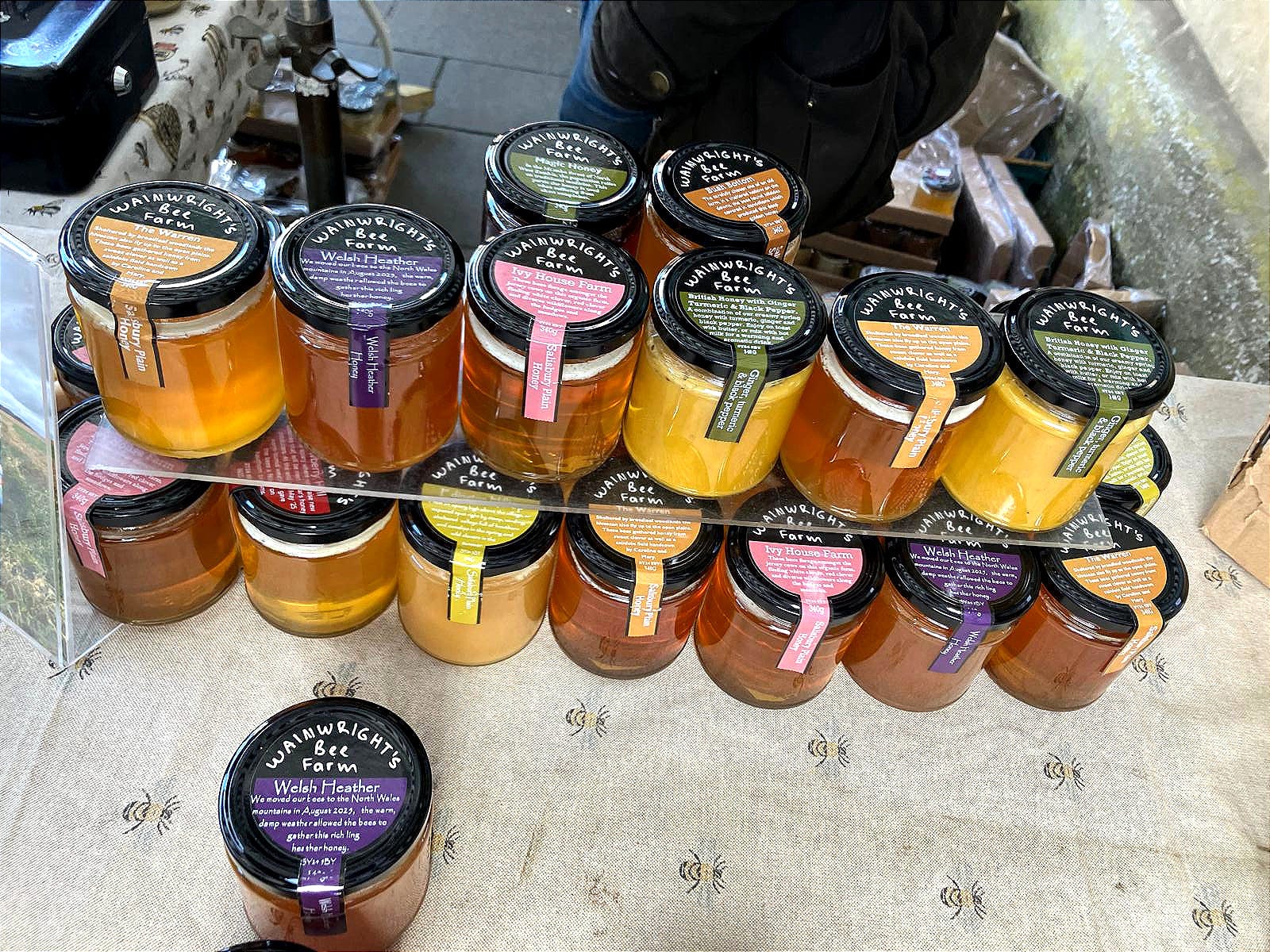
Saunter on down to your nearest Tesco branch, and you may find honey in a squeezy bottle for £1.19. Head to your local farmers’ market, and you’ll see a beekeeper selling the same grammage of honey for something in the region of £8.50.
Though extortion may first come to mind, the difference – other than the price tag – is that one of these is genuine honey supporting local ecosystems, offering some kind of therapeutic benefit, and harbouring a diversity of complex flavours and textures. The other’s likely sugar syrup, even if it assures you it’s ‘pure and natural’ on the bottle.
This was demonstrated earlier this year, in fact, when beekeepers in Sweden analysed jars of shop-bought Hilltop Honey (Britain’s second largest honey brand). They found the products contained ‘sugar’, ‘foreign enzymes’, and a ‘very low’ amount of the properties required to be legitimately considered ‘honey’.
Ultimately, these particular Hilltop products (others you can pick up in the UK for as little at £1.88) were deemed misleading to the public – if it didn’t reach the bare minimum for what should be called honey, then it shouldn’t be labelled as such.
Some might say this incident is a fault of the albeit rigorous methods in testing honey, or overly stringent EU regulations (honey sold in the EU for example must show its country of origin). Others might call it deliberately fraudulent.
Whichever it is, it’s far from the first time shoppers have been misled. In 2024, the Honey Authenticity Network (HAN) inspected 25 jars of honey from major retailers in the UK. 24 of those jars were flagged as ‘suspicious’. “A lot of the stuff that’s [imported] in could just be honey-flavoured syrup,” Lynne Ingram, a Somerset-based beekeeper and UK chairwoman of HAN, recently told The Grocer.
This is most tangible when you actually taste the stuff. Squeezy honey has that one-dimensional essence of honey we’ve come to expect, and pasteurised and filtered to get that oh so convenient runny texture. A jar of genuine honey, meanwhile, can mean virtually anything from a thick ink-black honey tasting like licorice, to a bright, herbaceous, and delicate honey – all depending on how its bees have foraged.
“My Ling Heather honey bees are transported to the heather in September for the four week flowering period,” Louise (Howell, beekeeper and founder of honey merchant Louisebees), tells me. “The honey is like a jelly and really strong in taste – almost chewy.”
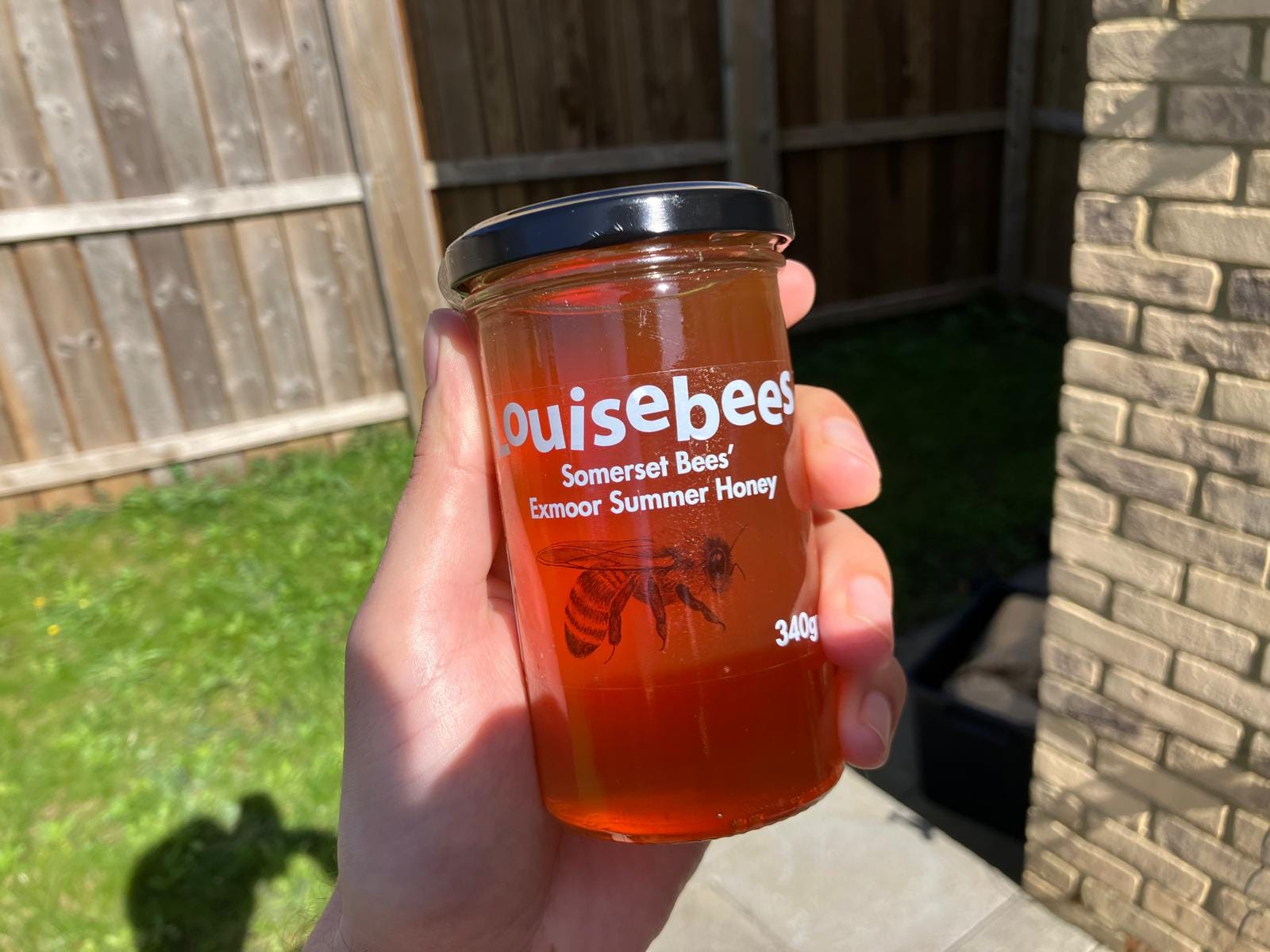
Louise borders Somerset and Wiltshire, and says her honey reflects much of the local landscape. “We are lucky Somerset Council don’t mow our dandelions on verges. That makes fantastic honey and the pollinators love them – it’s very nectar-rich. In Rode we also have lots of Fussels’ rapeseed around us. Many beekeepers don’t like this because it sets solid very quickly in the hive, but I think it’s great and I make my soft creamed honey out of it.
“We’re also really lucky to be so close to Salisbury Plain. It’s an incredible habitat and provides such a wide variety of unusual forage, like wild sainfoin – the honey from that is delicate and herbal.” Others of note include apple blossom honey – rare, but as you’d expect does make the odd appearance in Somerset – which is loose, delicate, and complex, with subtle apple notes.
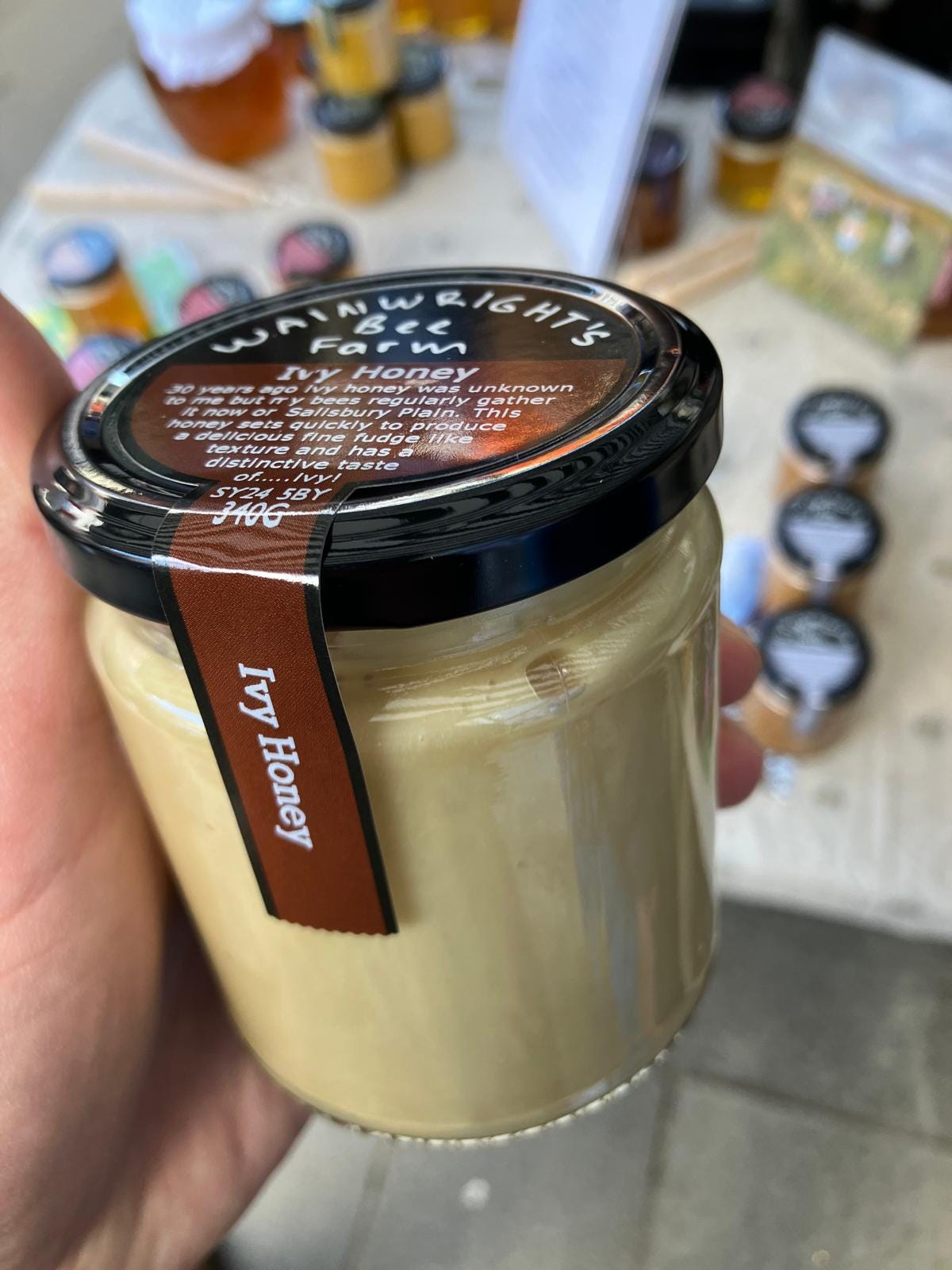
These kinds of honeys also tend to contain enzymes good for us. Dandelion honey, for instance, is restorative to the kidneys, stomach, gall bladder, and liver. Honey from heather, loaded with antioxidants and antibacterial properties, can help treat infections and digestive disorders. Ivy honey, not unlike that from the manuka plant in its remedial effects, can boost the immune system or, more simply, soothe a sore throat. Though the word ‘superfood’ gets thrown around with too much abandon these days, raw honey certainly fits into that category. But only when it’s not pasteurised – commercial honeys are often if not always heat-treated to 63-80ºC to make them clear and shelf stable, but this cooks off much of the good stuff, ergo reducing honey to little else but glucose (80%) and water (20%).1
Nothing about all that comes close to raw honey’s most important facet, however – its indirect role in maintaining biodiversity, if not the food system at large. Up to 75% of all food produced relies on pollinators – such as honeybees – in moving pollen from plant to plant, therefore aiding fertilisation, and therefore increasing propagation and productivity. In the same way, local biodiversity is highly dependent on flower-visiting insects. I’ve always thought there’s not a single ecosystem in which humans naturally contribute, but beekeepers may well be a rare exception – buying honey from a beekeeper supports that beekeeper, who supports their bee colonies, who in turn support the wider local flora and fauna. “Disease and climate change have made it very difficult for honeybees to survive in the wild for very long,” says Louise. “So their survival and success is very much down to beekeepers.”
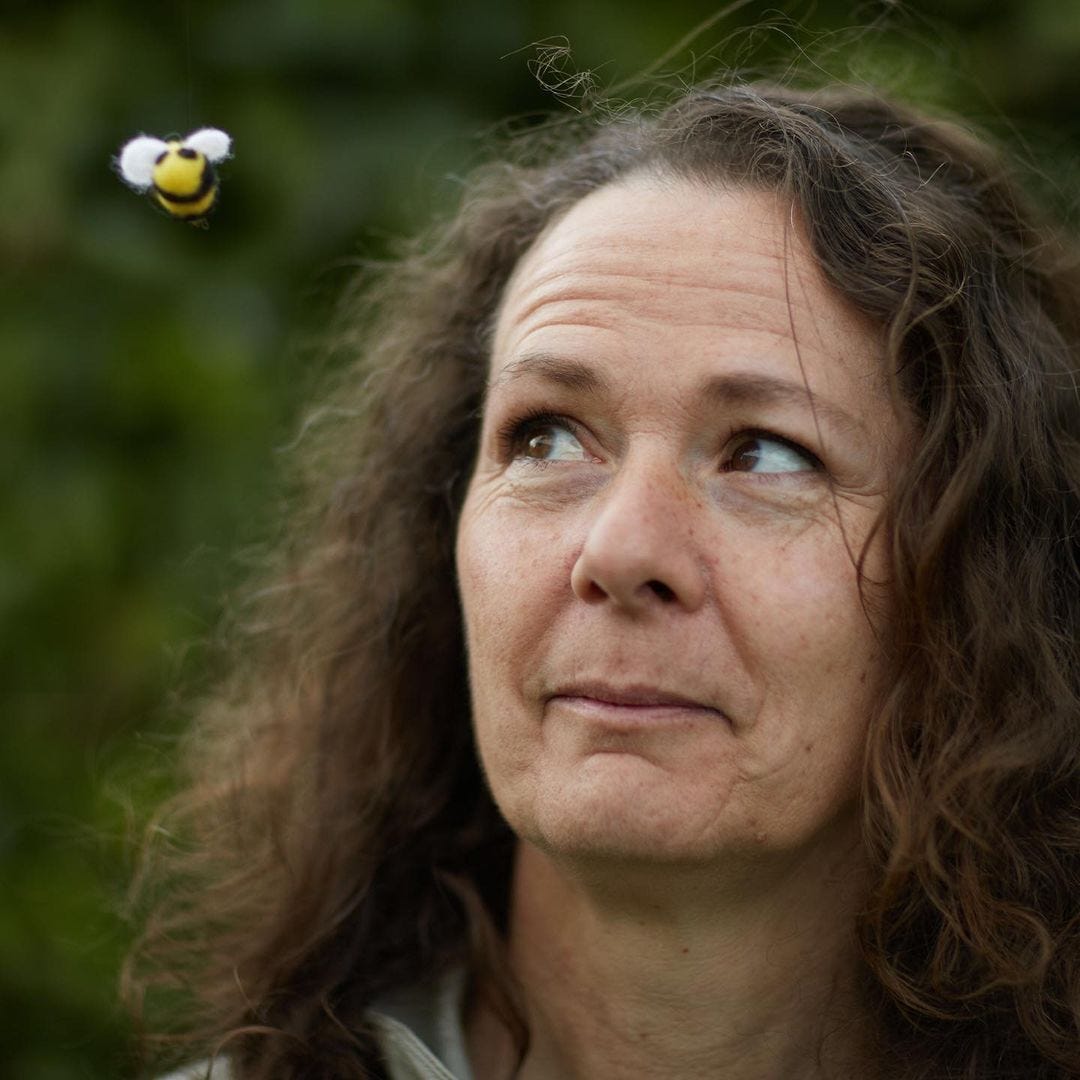
This has been particularly true of late – beekeepers across the South West witnessed “devastating” losses among their bee colonies, owing to the weather this winter. “The wet January and February was awful for bees, as this is when they need to get out and access the first nectar and pollen of the year,” Louise says. “I lost two colonies that had managed to come through the cold months OK.”
Despite changing climates posing an increasing danger to bees, and the commonly-held belief that pesticides are the leading offenders of their demise, the biggest existential threat is neither of these. Rather, it’s cheap honey. If your local beekeepers are priced out of the market by competitors the other side of the world (China is the world’s leading producer of honey), your local hives cannot be sustained and your local biodiversity suffers.
Why then, you might ask, are there not regulations over what can and can’t be labelled as honey? There are, after all, constraints surrounding other foods, such as cider, Cornish clotted cream, and Stilton.2 Meanwhile, syrups deriving from rice, wheat, and potatoes can and have fooled tests designed to prove whether a product is real honey. The reality is, while things like an International Organisation of Standardisation are currently in the works, and other regulations around honey already exist, loopholes will inevitably be found, or new standards likely won’t be sufficiently strict or enforced.
Like much other food, if there’s not enough in place to help people build trust in the honey they buy, then it ultimately comes down to trusting who they buy it from. That’s why we have things like the organic label or, failing that, farmers’ markets designed to put shoppers face-to-face with the people who produce their food.
Unfortunately, there remains no definitive way of fully knowing what you’re feeding your body and whether it has any positive or negative effects on the environment. But the human element of our understanding, via the real-world conversations we have, might be the closest we’ll get.
Honey producers in and around Somerset include:
Black Bee
Louisebees
Wainwright's Bee Farm
Magee's Bees
Sedgemoor Honey Farm
Worried about honey’s use by date? Don’t be – it’s about the only food that never goes off
Each must contain 35% apple juice; 55% fat; and 48% fat respectively
Thanks for the article, it made me look for local honey suppliers, I found a couple. I must stop buying the supermarket crap ones!!
So much appears to be about (a lack of) general knowledge as well. Beekeepers I know are forever amazed at seemingly well-educated adults not knowing about, for instance, honey's near infinite shelf-life or even that different plants beget different flavours.
Not sure how you fix that but I can say from experience at markets that knowledge around food generally, its provenance and preparation is frighteningly woeful.