


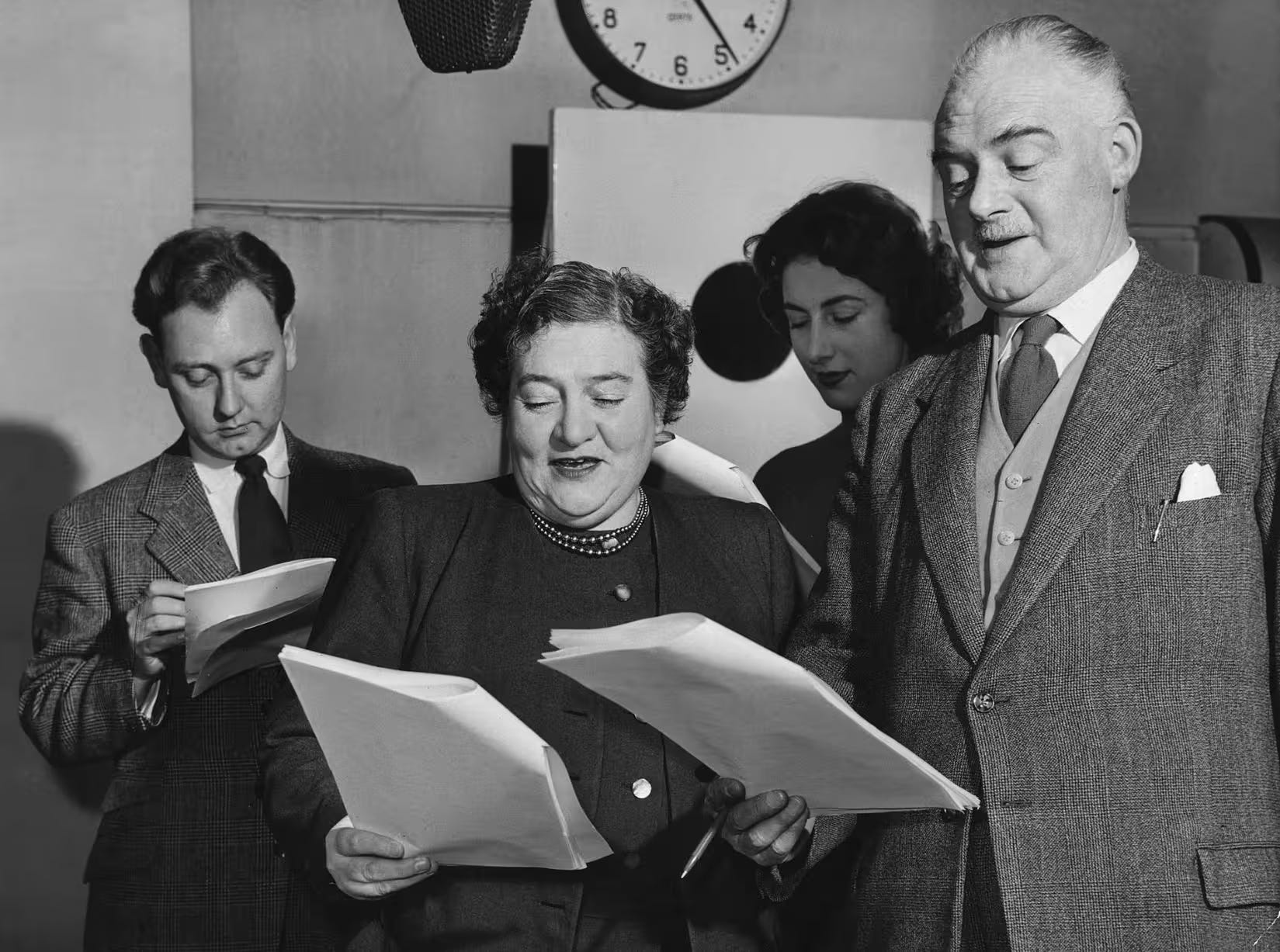
In a 1951 episode, this being the first year of the The Archers’ broadcast, character Dan Archer buys a Ferguson TE20, retiring – with a heavy heart – his shire horses Boxer and Blossom. In almost no time at all, Archer’s farmhands admire the rate at which the new tractor turns over their fields, the work the horses once undertook sluggish in comparison.
You wouldn’t know it now, but The Archers originated as a means to educate farmers, compellingly presented though it was as drama. This was a joint effort, no less, by the BBC and Ministry of Agriculture to subtly espouse supposedly innovative farming tools and methods like tractors, agrochemicals, and GMOs as part of the groundbreaking but ecologically devastating Green Revolution.1 Would it therefore be unfair to refer to what became the world’s most popular radio drama as propaganda? “No, it wouldn’t,” former Archers editor Graham Harvey tells me.
By the time Graham joined The Archers’ scriptwriting team in 1984, the show was exploring various other themes such as rural decline, village life, and a changing English countryside. Some of which, ironically, manifesting from the extractive philosophies the show had perpetuated.
Even now (more than 21,000 episodes in and into the show’s 75th year), agricultural pedagogy lingers in a show presented as entertainment: In a recent episode, two farmworkers muse on how their greenhouse’s automatic thermostatic vents have helped increase what they can produce. Then, in a scene down The Bull, we hear of a couple’s struggles as part of their fledgeling but clandestine romance.
Graham’s tenure on the show, lasting 34 years, saw him become a kind of ‘Environment Secretary’ for The Archers’ fictional village of Ambridge, where he’d slip in references to more nature-friendly farming ideals like restoring wildlife habitats, or returning health to soils with the help of deeper rooting plants.
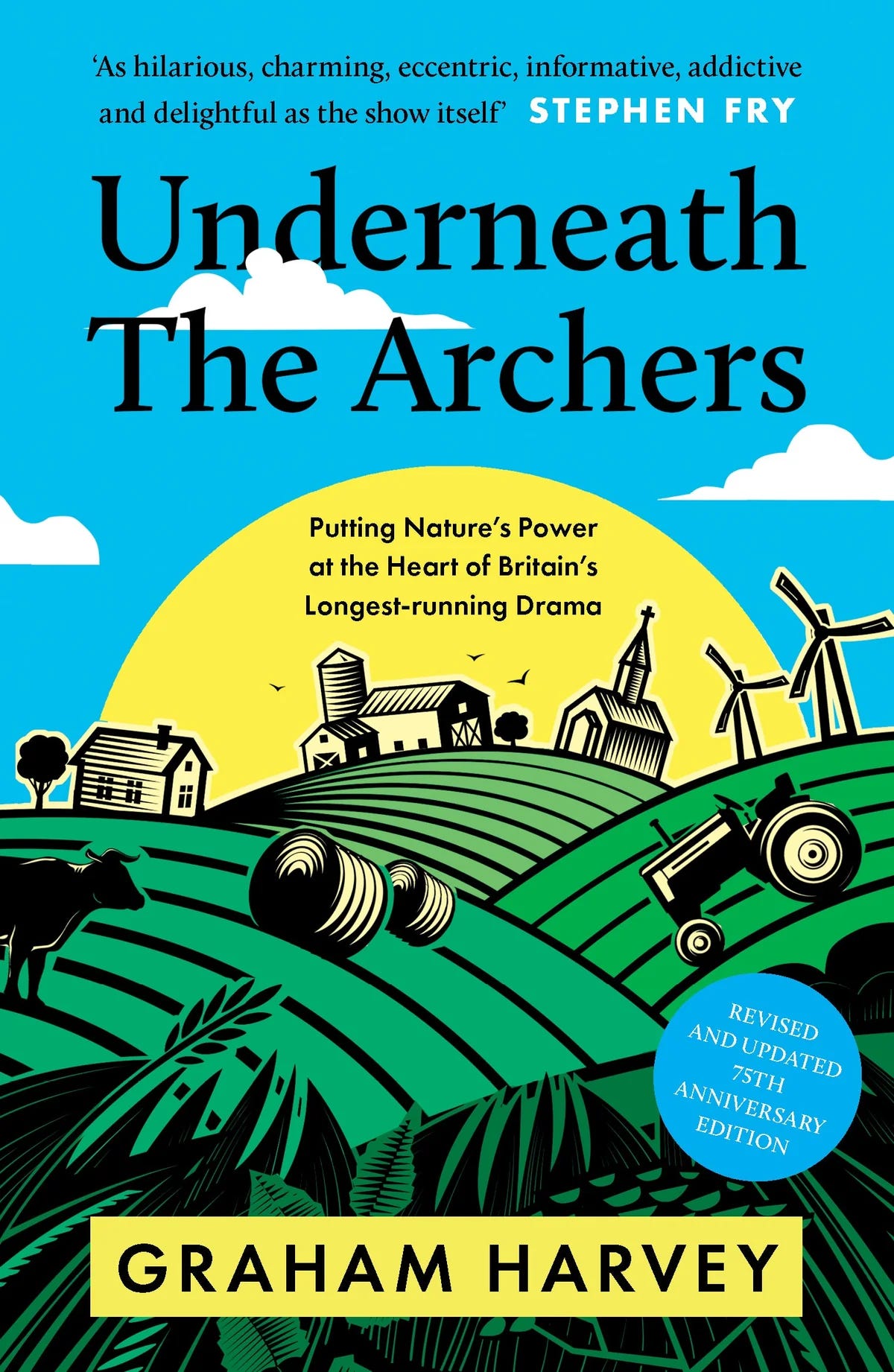
From his home in West Somerset, Graham has written a book on such matters. Underneath The Archers (newly in paperback) explores, in part, how the show could help guide farming in Britain towards a more responsible ethos – in a similar way to its original role, however much in reverse.
And so, in the interest of better understanding how the show got to where it has (while remaining one of the UK’s most popular radio programmes), and as I’m not averse to a bit of self-referentialism: herewith a farming journalist chatting with a former farming journalist and scriptwriter, in the form of a script. Edited for clarity and brevity.
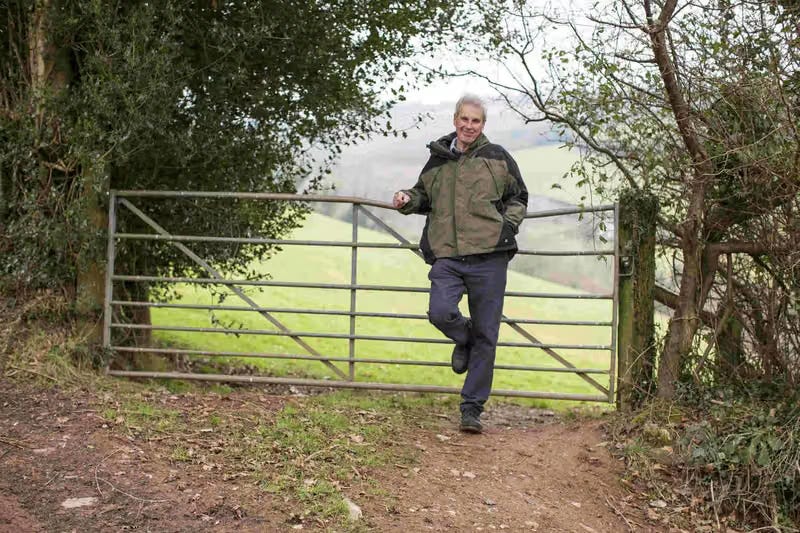
Hugh: Do you still listen to The Archers?
Graham: I like to stay up to speed with the storylines and so on. So I do listen, yeah.
Hugh: I went back to some of the earlier episodes, including the first one, and it seems one constant is the weather. Which makes sense, as that’s what still seems to worry farmers most the time.
Graham: It’s funny you should say that, because the weather is actually the one thing [the show’s producers] can’t really deal with now. They plan their stories so far ahead, they assume average weather. One of the points I make [in my book] is that the way they’ve always done it doesn’t work anymore because of climate change.
Hugh: Recording was how far in advance when you were writing for the show?
Graham: That could be a week or two.
Hugh: And you’re suggesting they should be doing it in-the-moment now?
Graham: To have any credibility, I think they have to. I’m sure the BBC won’t want to, as all their programme budgets are being cut, but they will need to have some of the stories not written until the day before broadcast.
Hugh: Could you tell me a bit more about how you got into your role? How did you write the narratives you were able to write?
Graham: Before I joined The Archers, I was writing for Farmers Weekly. They really wanted to publicise a new chemical system imported from the US based on high-yield wheat varieties, nitrogen fertiliser, and constant application of pesticides because they were making a fortune in advertising from the chemical companies. I was pretty hostile to this from the start.
As I was working freelance, it became harder and harder to make a living because the mainstream press wasn’t interested in agriculture, and the farming press wouldn’t take my stuff. So in kind of desperation, and even though I’d never written any drama before, I made up some scripts for The Archers, sent them in, and got a week’s trial episodes.
Eventually I was also devising the farming storylines, and I tried where possible to introduce sustainable farming methods into the show. The BBC being what it is, they were nervous about anything that would get the farming lobby riled up. I had to be very careful and do it in a balanced way, but I got stories in about GM crops getting trashed [by activists]2, herbal leys,3 and so on.
Hugh: Who were you writing the show for at the time?
Graham: Very much the general public. Until the late ‘70s, the show was directed, produced, and written by men. Then in came a bunch of feminist writers who made it a much more listenable, popular programme. It was very lighthearted at base, but cleverly written with sparkling dialogue. That’s the show I joined.
Hugh: Though the programme and the BBC in general had shed its educational approach by then, it sounds like you personally were still trying to educate listeners?
Graham: The main reason I got on was that the popular press, like the Daily Mail, criticised The Archers in losing touch with its roots. Which was true to some extent, and that’s probably why I lasted, as I put lots of farming in my episodes.
What interested me in that history was that when The Archers started, it came out of a community of small tenant farmers. In a sense, the BBC was undoing that. The small farmer, Walter Gabriel, was made to look like a comic character, whereas Phil Archer – the aspiring middle-class farmer – was made to look modern and go-ahead, increasing his acreage and mechanising. So the BBC was promoting the very thing that was undermining the community it was supposed to be portraying, which amuses me.
Hugh: So you were trying to undo a lot of the program’s previous philosophy in a subversive way. Did you have to toe that line carefully?
Graham: It did get me into trouble a couple of times. There was a scene with a great row between the organic farmers, Pat and Tony, and [upper-middle-class farmer and businessman] Brian Aldridge. Somebody complained that the scene showed bias toward organic farming. I didn’t think it did, but they pushed the complaint through.
My boss and I ended up in front of the disciplinary committee and the Board of Governors defending that one scene, which was ridiculous. In the end, they dismissed the complaint, as I knew they would. But the agribusiness lobby is very powerful. If they sense a popular show is putting forward an idea they consider threatening, they’ll attack it.
Hugh: You were saying that the show might’ve lost touch with its farming roots at times. What was the overall philosophy while you were working on it?
Graham: Well, there’s farming and then there’s farming. [The show’s editors] don’t go into the issues of whether the way we farm now is the right way to farm – they tend to steer clear of that. They will always go for a soft target rather than something contentious.
For example, they did a story where a fictitious river water authority caused pollution around the village. Everyone agrees water authorities are bad and polluting, whereas the BBC wouldn’t do a story about nitrate fertiliser pollution, which is a big issue, because they’d probably be scared of the backlash. The power of the agribusiness lobby is still very strong.
Hugh: Yeah, look at things like soya and how that moves around the world, or the big ten food manufacturers who own a crazy percentage of the calories we eat. It’s a long chain, ultimately controlled by very few people. It seems impregnable.
Graham: It does. Mainstream food production is still that great centralised global model entirely driven by nitrogen fertiliser.
Hugh: And fossil fuels by extension.
Graham: True, but I keep coming back to nitrogen fertilisers because if we taxed them out of existence, all farms would become regenerative – they’d have no other means of maintaining fertility. That’s why I think it’s such a crucial issue that should become a central political topic.
Hugh: Was it much of an uphill battle back in the day to get these kinds of stories out in the show in the first place?
Graham: It was an uphill battle because there was very little public interest in any of this, and so no sense that the popular audience wanted to hear it. Whereas that’s really ramped up in the last ten years.
Some of my fellow writers used to get annoyed with me going on about the importance of these stories when they wanted to focus on emotional drama, which I understand. When I listen to the program now, regenerative farming comes up and a lot of the farmers are doing the right thing. But what they don’t do is highlight the issue with conflict, which you need in drama otherwise it doesn’t mean anything to anyone. You can have a regenerative farmer on The Archers and it sounds wonderful, but unless you’re having an argument and attacking the other side, nobody understands the damage the industrial way is doing.
Meanwhile, if you say “this system of agriculture is better than that,” you are somehow made to look extreme. The mixed farm system I campaigned for was the approved, scientifically supported system when I was a student in the ‘60s. George Stapledon, the leading agricultural scientist of the 20th century, called the mixed farm the ideal system for Britain. Within ten years, we were doing something completely different, and anyone who opposed it was made to look backward or like a troublemaker.
Hugh: Are you optimistic about the future of farming?
Graham: I’m optimistic that we have to change, because otherwise we’ll be in such a crisis. We have to regenerate soils and put carbon back into them. I guess it will take a disaster – like food prices going through the roof, shortages in shops, or riots – for everyone to realise we need to do things differently.
Hugh: At the moment, there seems to be more and more greenwashing and token gestures. I got a press release from Kellogg’s saying they are investing in regenerative farming, but the small print shows they’re just buying offsets without actually dedicating [their ethos] to regenerative farming. It’s like, virtue signaling with empty calories.
Graham: Exactly. The starting point is that people shouldn’t be eating those kinds of products anyway.
Also reminiscent I think of Britain’s agro-colonialist tendencies. See on those lines: potatoes in Ireland, opium in India, and halloumi in Cyprus.
Graham wrote in the plot of a farmer vandalising genetically modified oilseed rape, worried was he of it cross-pollinating with his own crops. In a case of life imitating art, IRL Greenpeace activists were arrested for destroying a GM crop field soon after the episode aired.
Herbal leys: a diverse mixture of grasses, legumes, and herbs planted to improve soil fertility and livestock forage.