


Last time the WFJ properly checked in with brewer Chester Ellis, he’d just come out with his very first beers – a helles lager and pale ale – under the banner of Somer Valley Brewing (SVB). Much more recently, he’s set up a brewery at his family’s farm in Peasedown St John (previously all his beers were ‘cuckoo’ brewed at On Point Brew Co in Bristol), and opened The Welly – something somewhere between a pub and taproom on the site of what used to be Belushi’s in the middle of Bath.
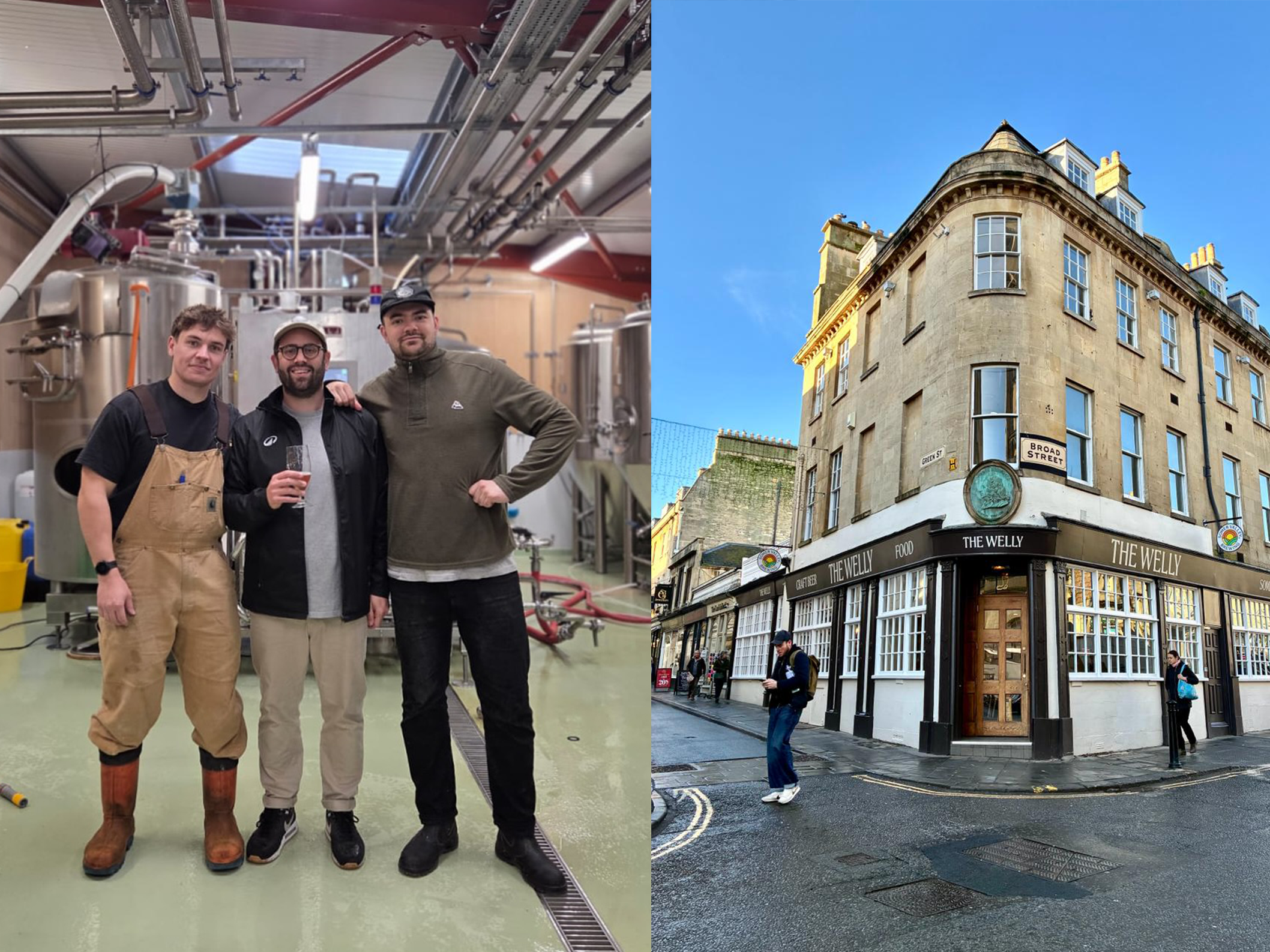
SVB first popped up on the WFJ’s radar not because it was Somerset’s newest brewery at the time, but because it was connecting brewing to the land. SVB is fairly unique in that it grows a lot of its own barley (processed into malt at the famous Warminster maltings) used in its beers. This being the ingredient that adds body, texture, sweetness, and colour to a beer and the fermentable sugars that the yeast turns into alcohol. But could its locality also say something about Somerset and its food and drink culture?
Heritage and culture is also manifesting in the supposed resurgence of cask beer which, for those unfamiliar, is matured in and dispensed from (via handpull) a cask rather than a pressurised keg (served via a tap). Cask is loved because it’s a sessionable yet – like cheese or kimchi – a complex, living product, and unique to the UK and its pubs. We mention this later, but it’s worth reiterating: without cask beer, the traditional British pub would likely not exist.
As we all know, the first six weeks or so of the year are pretty challenging for hospitality businesses. And, with pubs declining at a rate of one every week in the UK, one has to wonder what it’s like operating a drinking establishment at this very moment.
The following exchange is close to verbatim, but edited for clarity and brevity.
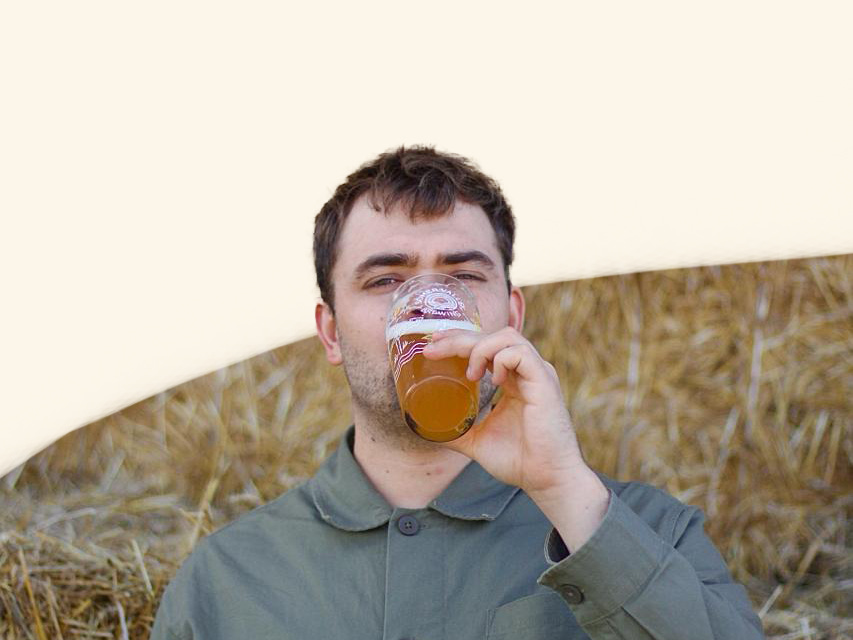
Hugh: So, what’s it like running a pub this time of year?
Chester: On the 3rd of January, we were actually busy enough because of a Bath [rugby] home game. But from there on, we saw a massive decline in trade. When January hits after a big December, and you start seeing very low turnover days, it is difficult. Our weekends are 60% of what they were in December, but they’re not awful. And the thing is, when the business is new and you don’t have last year’s data to compare to, you find yourself comparing to the previous month. We started in the middle of October, then had the whole of November, which is actually traditionally quite crap for hospitality as well, because everyone’s saving money before Christmas.
Hugh: Why did you open a pub in the first place? Or is it even a pub – you call it a taproom, right?
Chester: It’s an elevated taproom with a small plate menu, essentially. We wanted a place where people who hadn’t necessarily heard of us could come and try our beers and our food and learn a little bit about who we are and what we’re doing, linking back to the farm and all those bits and bobs. And, as a brewery, you need to be able to have direct sales to the drinker. It’s great getting your beers into all the pubs you can, but where the margin lies is in your own taproom. When that building [the former Belushi’s] came up for us and we knew the previous occupiers, we went for it. I guess it’s important to add that we’ve taken the whole building, and we have plans to use upstairs for accommodation at some point.
Hugh: So even after securing the site, even after all the overheads, even after the labour, etcetera, it’s still more cost-effective to run your own pub than sell beer to pubs?
Chester: We don’t have the data to be able to tell you that right now. But all I can say is the margin I’m making off a pint we brew ourselves is much higher. You’re creating the beer for 80p a litre, say, and you’re able to sell it back over the bar at £11, £12, £13 a litre, as opposed to creating that same beer and selling it to the trade in a keg for £3 a litre. But yeah, all the overheads are pretty mental. I mean, I’m only just getting my head around it all, and labour is by far the biggest one.
Hugh: But how come you’ve got such a wide selection of beers made by other people, then? I mean, you’ve got, what, 19 lines there? I can’t think of anywhere else in Bath with that many.
Chester: We’ve got 18 draught lines, and two cask lines. We’re entering our third year, but it really feels like it’s only just getting going for us because we’re now brewing on the farm. We’re producing much better quality beer than we were a year ago, for sure. I guess the plan is to eventually occupy as many of those lines as we possibly can, but we’ll always have room for guest beers as well.
Hugh: You said you’ve been making improvements over the past year or so?
Chester: Now everything is at its home on the farm, we’ve got a lot more control over our processes as opposed to when we were brewing in Bristol [at On Point Brew Co]. I couldn’t be there five days a week, so I might miss a gravity reading or I might not be able to get a dry hop done on that particular day. We’ve also been able to brew stronger IPAs, we brew a new bitter, and we brewed our first sour.
Hugh: A lot of the cereal growers had a pretty terrible harvest in 2025. Was that the case with your barley?
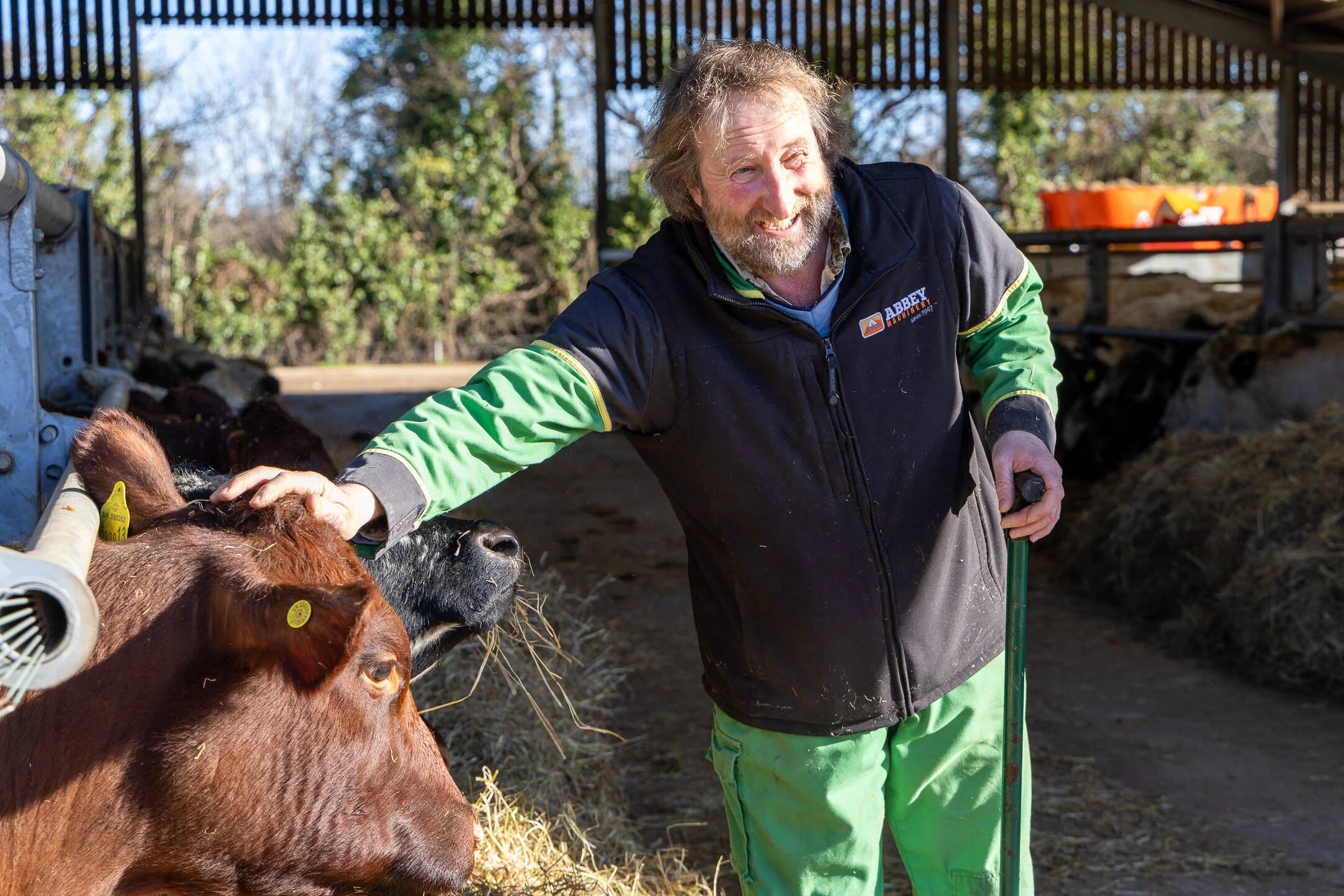
Chester: A lot of it from this year went to animal feed, because it didn’t reach the grade. But we’re fortunate to be among a lot of other local farmers – as long as it’s still grown within the Somer Valley, we’re still able to access good barley. So we do have to lean on that from time to time.
Hugh: Do you think Somerset has much of a beer culture to itself?
Chester: I don’t know, really.
Hugh: I’m just thinking, even though it’s probably not very relevant anymore, but back in the day beers brewed up North tended to be more malty because they didn’t have as much access to hops up there, whereas obviously hops grow better down South. I suppose on the lines of the North-South divide, we could talk about sparklers, can’t we? I don’t know if you use sparklers on your handpulls?
Chester: We do for Gurgle, our bitter.
Hugh: Do you do that to improve the head, etcetera?
Chester: Exactly. We don’t use them for pale ales and IPAs and other cask beers, but yeah, a lot of our ‘thing’ is how the beer is presented over the bar. We’ve got a big light box board showing a list of all the beers, and we started off by just listing the cask on that and not having badges on the handles, and it just wasn’t moving very well. And then we put the badges on the cask handles and lo and behold we started selling loads of cask.
Hugh: Is cask important for you from a cultural perspective?
Chester: Definitely. Guy [brewer a SVB] and I are super into our bitters at the moment and all sorts of cask varieties. We want it to do as well as it can as it’s such a big part of pub culture in the UK.
Hugh: I think I remember reading somewhere if we didn’t have cask, we probably wouldn’t have pubs. Or at least we definitely wouldn’t have them in the kind of volume that we have now, even though they’re declining.
Chester: I think that’s probably true. I mean, I’ve lived in Australia and New Zealand where they have pubs, but they’re nothing on ours.
Hugh: They’ve tried to introduce cask beer to the US, but they just don’t have the tradition or more importantly the distribution for it to actually work.
Chester: It might even be down to palate as well, and climate. In Australia and New Zealand, they don’t drink cask. They want to drink beer as cold as possible.
Hugh: Do you make a loss on it? Considering that if you go up to a bar, you’re spending something like £5.50 on a pint of cask compared what, at least £6.50 on a pint of keg beer?
Chester: It’s down to cost of production. If you’re getting rental casks, you can get them dirty and poke a spray ball in there and give it a good clean yourself – a lot easier than cleaning a keg because you’re working with an unpressurised vessel. Also, traditional breweries aren’t putting anywhere near as many hops into their cask beers than a modern craft brewer would into a keg beer, and the hops are what drives the price – they’re by far the most expensive ingredient that goes in.
Hugh: Is it that cask tends to ferment out quicker as well?
Chester: You don’t have the utility cost of it hanging around in the tank for ages, for sure. Gurgle [4.1% bitter] we can get brewed and into a cask within seven days. And then it spends a week conditioning in casks before it’s put into cellars and then it spends a bit more time conditioning there.
Hugh: Compared to two weeks or so in the brewery for a kegged pale ale?
Chester: We’re turning our pales around in three weeks now. We’re not rushing things.
Hugh: Glad to hear that cask is alive and well by the sounds of it.
Chester: We saw an increase in cask sales over 2025. I think it’s definitely on the way up.
Read next>
Out for lunch

Perhaps it’s because I’ve been reading more creative/expressive/cultural works of late, or perhaps it’s because this anecdote is part of a larger one involving a rather Strange Day Out (or perhaps it’s – somewhat unintentionally – actually quite relevant to the subject at hand), but the following is written in a more literary fashion than what’s usually…