


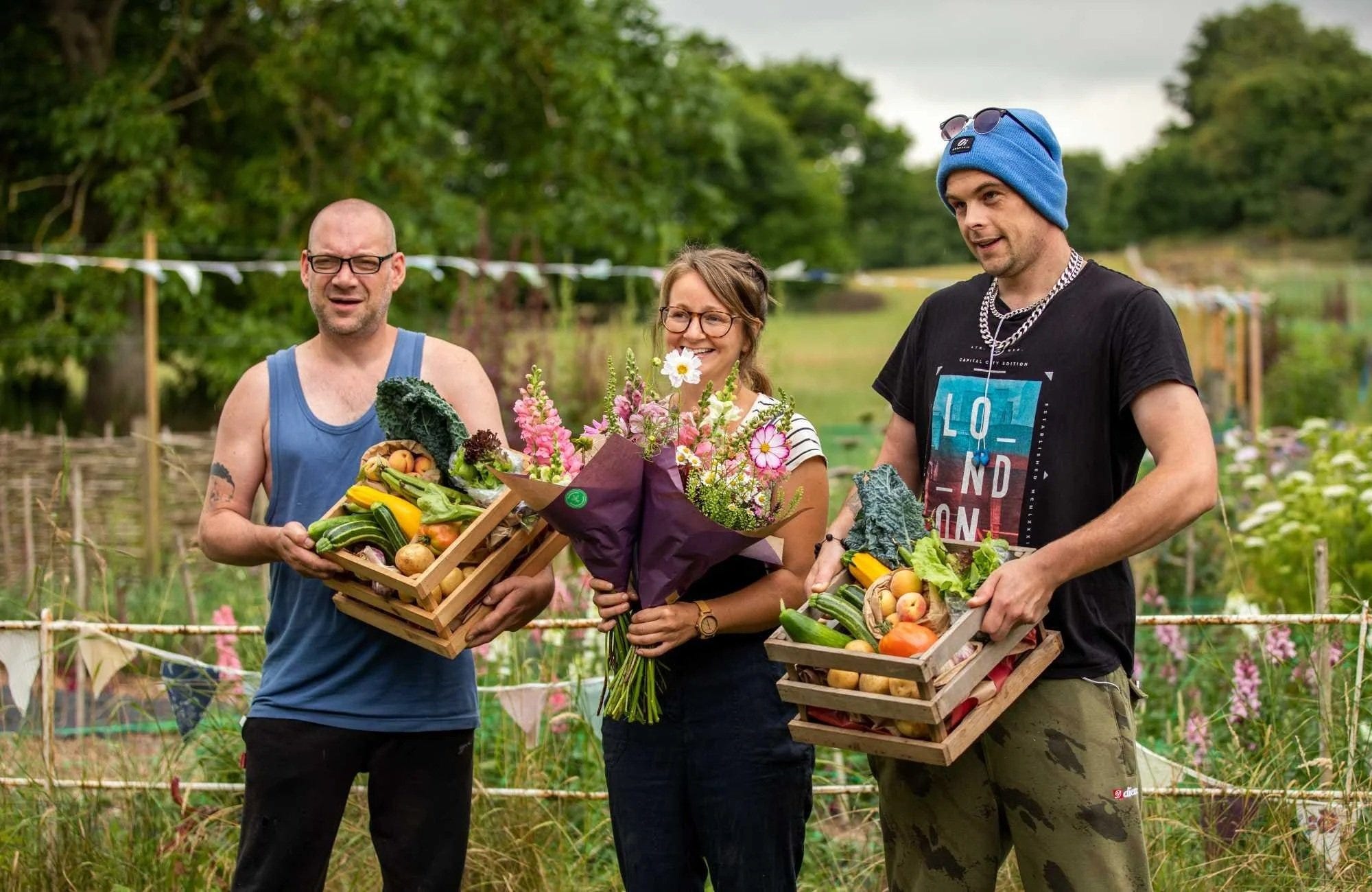
I had an inkling certain parts of the UK were enjoying a market garden renaissance. But it wasn’t until recently, when collecting Somerset’s offerings into one directory, that I noticed the extent of this sudden profusion of small growing sites supplying seasonal veg to the towns, villages, and city suburbs around them.
Within the last five or so years, Somerset has gained at least 17 market gardens (though it also lost one or two on the way). These could be defined as something closer resembling an allotment than a farm, run by a small team of growers on no more than a few acres, principally for growing veg and a little fruit, via chemical-free methods, and almost exclusively for feeding their respective communities – Bath, Radstock, Martock, Wrington, Taunton, Chew Magna, Wedmore, and so on.1
But, for some reason, their significance remains understated. Unless many people living in those areas have the land, time, and inclination to grow veg themselves, they will not otherwise have access to a hyperlocal source of vegetables unsullied by agrochemicals and commodity interests. The list of other positives – such as seasonality, traceability, a lack of plastic wrap, and the minimal use of fossil fuels – only keeps growing. New research, for instance, suggests how the more responsible farming methods typical of market gardens (minimal soil disturbance, no insecticides or pesticides, etc) can yield huge nutrient densities in their crops compared to what you’ll pick off a supermarket shelf.
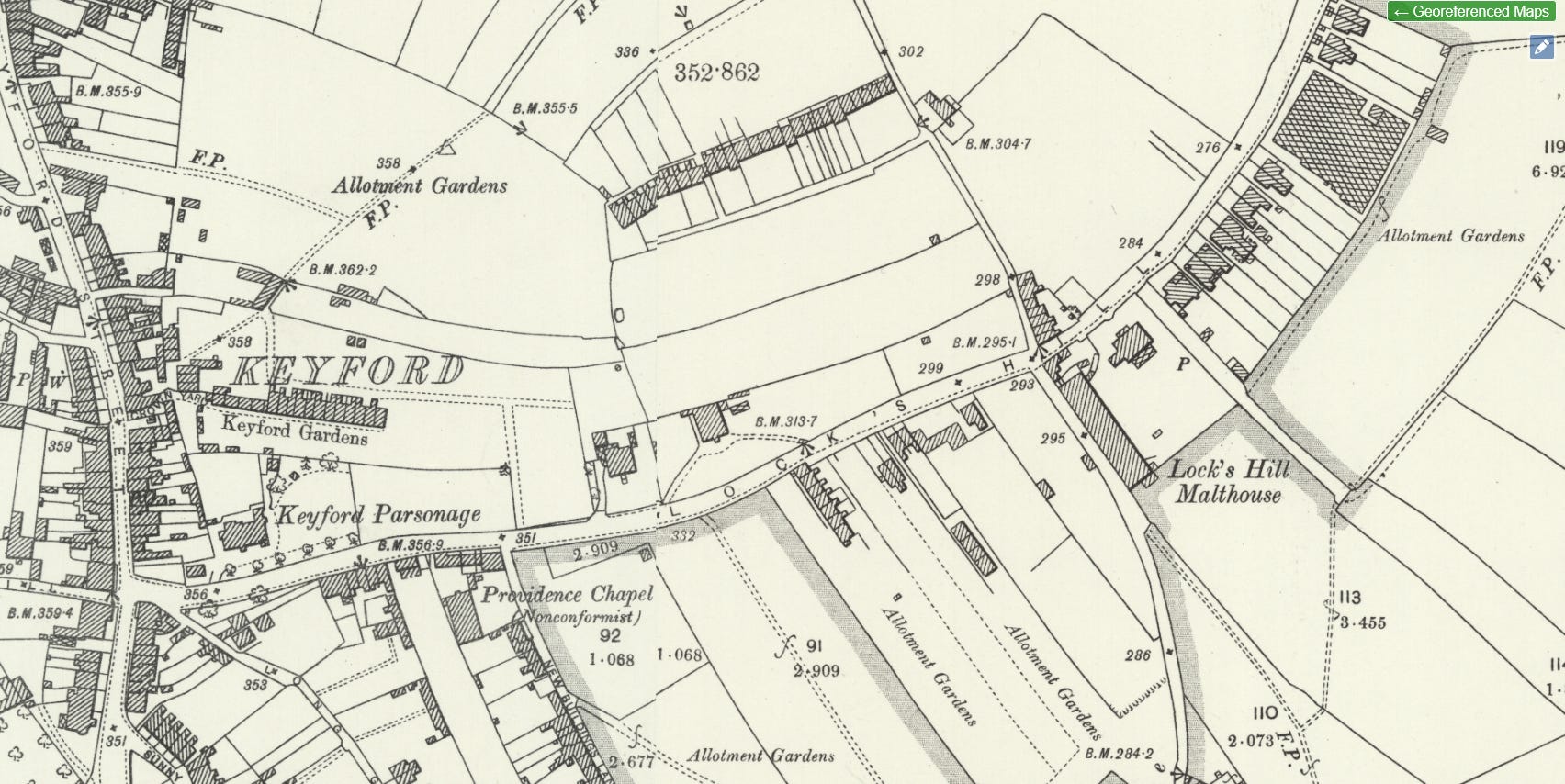
Embedding community growing within urban environments isn’t a new thing per se. Bring up a map of a Somerset town and its surroundings from the 1800s or early 1900s, and chances are you’ll find the area marked with dozens of allotments, before they were swallowed up by urban sprawl or supplanted by the globalised, centralised food chain we generally have now.
Feeding communities from within those communities has always been a sound idea. Enclosure – i.e. the gradual privatisation of UK land – and the devaluation of good food has for the most part rendered it untenable in reality. Clearly, that hasn’t stopped people trying, often as a reactionary endeavour against globalised food chains yielding poor quality food at the expense of nature and the environment. Dave, who grows at The Mump in Burrowbridge, quoted me a list of reasons why their market garden came to life in 2021, including “building biodiversity, healthy soil, community, resilience, and awareness of the perils of traditional agriculture”. In 2022, Jarrad and Debbie Hearman set up Capland Acre near Taunton, while seeking a rural lifestyle among nature and outside the influence of “Big ag”. As Jarrad says, “small-scale market gardening feels like an antidote to many of the environmental and societal issues that we are daily confronted with.” Meanwhile Hamish, who co-founded Middle Ground Growers in 2020, wrote me that “food and farming issues lie at the heart of emissions and degradation yet also offer a huge part of the solution,” and that market gardening is a way of “channelling my livelihood into this form of grounded activism.”2
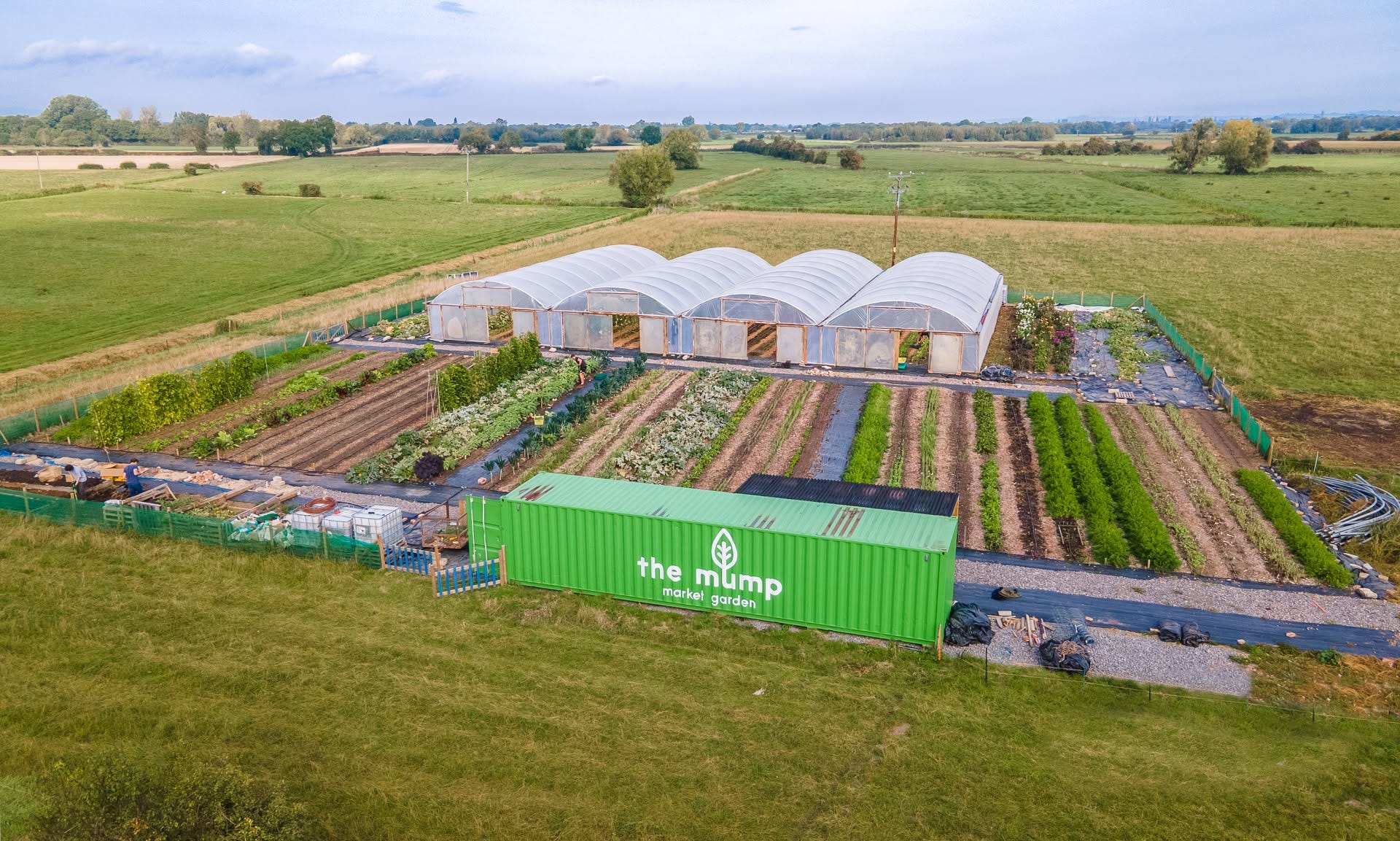
Hamish also points to the ‘multiplication’ effect this new movement in market gardens is having, wherein entrant growers learn their way at a market garden before moving on to establish their own within another community of their choosing, then helping train the next generation of new growers. The WFJ documented some of this a few years ago, when Vallis Veg were – more specifically than they are now – providing a rung for young growers to start their own enterprise (Ellie and Silas, then growing and selling to people of Frome under the wing of Vallis Veg, these days co-run a market garden in Sheffield). Let’s also not forget the sheer availability of other training or self-tuition these days – the YouTube godfather of no-dig horticulture himself, Charles Dowding, has his plot at Alhampton here in Somerset.
More so than restaurants and farmers markets, the main outlet for any market garden is that of a box scheme, whereby people living within a certain radius of the market garden are able to put in a recurring order for vegetables to arrive at their door on a particular day of the week, every week. On last count, that being in 2020, there were 600 veg box schemes in the UK. It is however a market dominated by Riverford and Abel & Cole, who combine to have an estimated half if not more of the total veg box market share. This is great when you consider the amount of people (Riverford currently delivers to 60,000 households a week) they’ve converted from the chemical-dependent a-seasonality of supermarket veg, but not so great when so many of their customers could be supporting their neighbourhood box scheme instead.
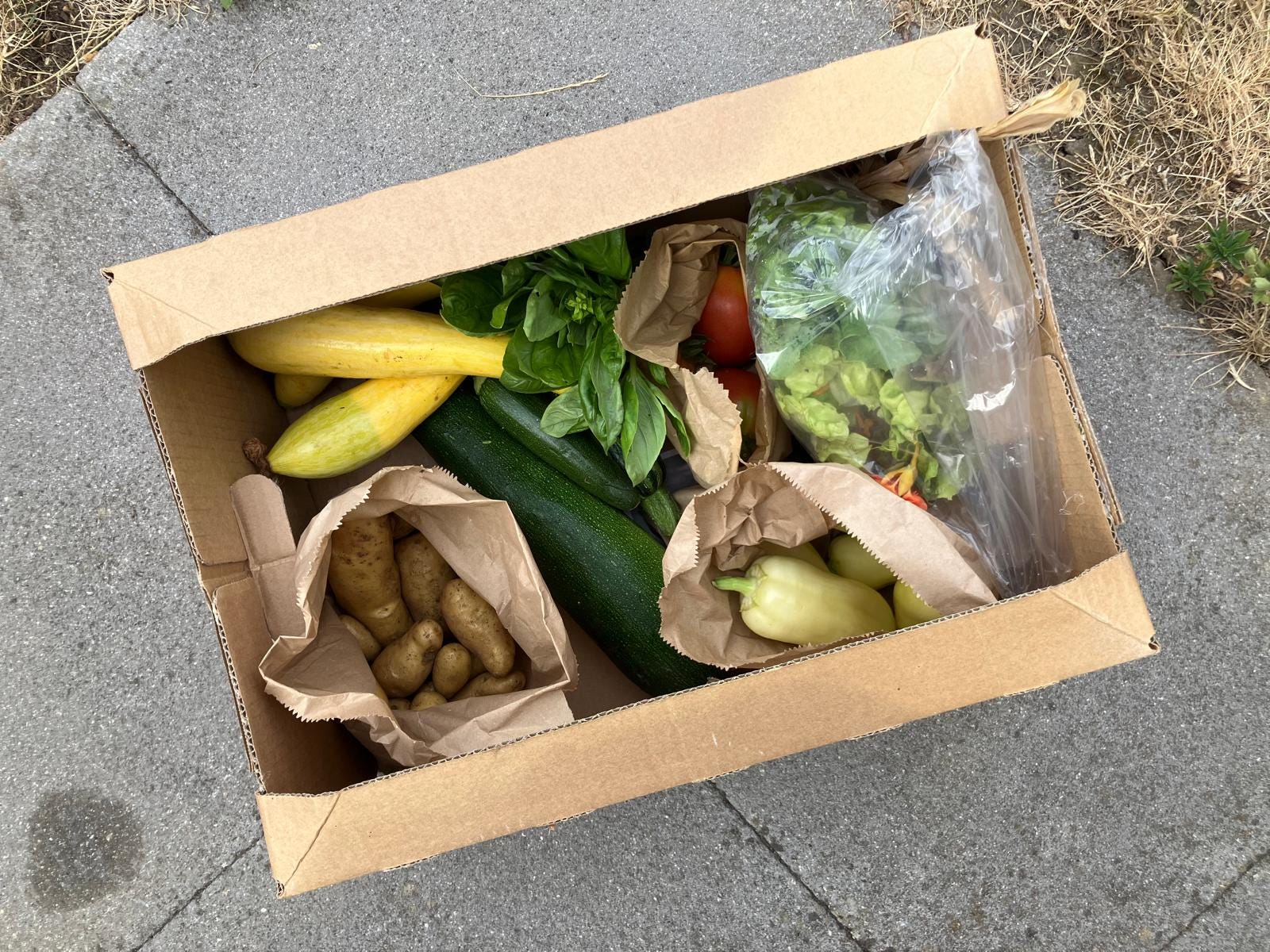
So why don’t they? If I were to guess, it’d be either down to the fact most market gardens aren’t certified organic, however much they follow organic principles (a whole other story itself), or that most veg box schemes outside the big two are much like Forrest Gump’s metaphorical box of chocolates. There aren’t that many home cooks, I suspect, who know what kohlrabi is, or relish the challenge of using up two kilos of parsnips that’ve just ambushed them out the box. To that I’d sooner blame recipe culture, which does not prioritise seasonality, than I would the cook.
In an ideal world, market gardens could save us a lot of problems. The Landworkers’ Alliance suggests that converting a mere 0.65% more agricultural land to horticultural production would meet the entire nation’s demand for fruit and veg – not bad, considering about half of that is currently imported. Meanwhile, a governmental horticulture growth plan is in the works, suggesting we could see even more of a profusion of market gardens in the near future.
Promising indeed, though it does make me wonder – can Britain’s food culture mature at a rate commensurate with this relatively abrupt supply of seasonal produce from market gardens? Or will they produce abundances of high quality veg with few willing to buy it?
Use your glut
We’re currently amidst the Great Courgette Glut of 2026, and no one knows this better than market gardeners and the households they supply. To overcome the surplus, see food writer Claire Ruston’s ideas, including courgette baba ganoush. I’m also eyeing up Julius Roberts’ courgette lasagne – not so great in a heatwave though.
I’ll also throw one of my staples into the ring – a simple courgette lemon arrangement that goes like this:
You’ll need:
Some courgettes
A few garlic cloves, chopped
Lemon, with zest
Olive oil
Sea salt (or table salt will do)
Note: Courgettes are 95% water, so it doesn’t really matter how many you have – cook them long enough and they’ll keep reducing. Salt helps with this.
Add to a large pan, on medium heat, a good glug of olive oil. Coarsely grate your courgettes whole and add them. Throw in lemon zest and a large pinch of salt. While stirring every now and then, cook down until soft or to your desired consistency – this may take 30 minutes, depending on how much courgette you’ve got.
Five minutes before the courgettes finish cooking, add the chopped garlic. Stir. Add lemon juice. Stir. Taste, adding more lemon juice or salt if needed.
Serve as a side. Have it on toast. Stir into freshly made tagliatelle with grated parmesan. Whatever.
Have you noticed more market gardens / veg box schemes in your local area of late? Let us know in the comments
Historically, any farm producing fruit and veg could be called a market garden, no matter its size or intention. But the definition has certainly adapted in more recent times
This is all without mentioning the market gardens set up exclusively by restaurants in recent times, such as those of Osip, The Prickly Pear, and (TBC) Walcot House
> and chances are you’ll find the area marked with dozens of allotments, before they were swallowed up by urban sprawl
This hits close to home. My maternal grandparents were given, and still live in, a council house built over a market garden in Devon. It's a shame about the market garden, of course, but they were living in a caravan, even if they could have gotten a house often people were living crammed into dwellings with earthen floors, no plumbing, etc. But in their early 20s they were given a place with all the amenities of the time, for very little rent, and were able to enjoy that prosperity, raise a family, and go from farm labourers to people working behind laptops in three generations. My grandfather still grows vegetables in the large garden they have, but once he passes, that generational connection to the land will be Gone. But I don't think either he or any of his descendants would choose the life of a farm labourer, wheelwright, or farrier living in those conditions with what we have now. I hope there will be a happy medium someday.
I have no interest in movements that link growers direct to consumers. What I want to see is food grown to the same hight productivity that people get out of their allotment's and home gardens. These are the real centres of intensive agriculture, with every weed destroyed, every plant watered at the first sign of drought, and fertilisers applied continually. By comparison farmers operate on a very hands off way.
So my question is how can these very intensive methods be expanded to cover all of agricultural production? Is there a way of tunning farms so that every weed or wild flower is destroyed as soon as it germinates, and every single square meter of land is under production with a strict demarcation of the wild from the garden.