


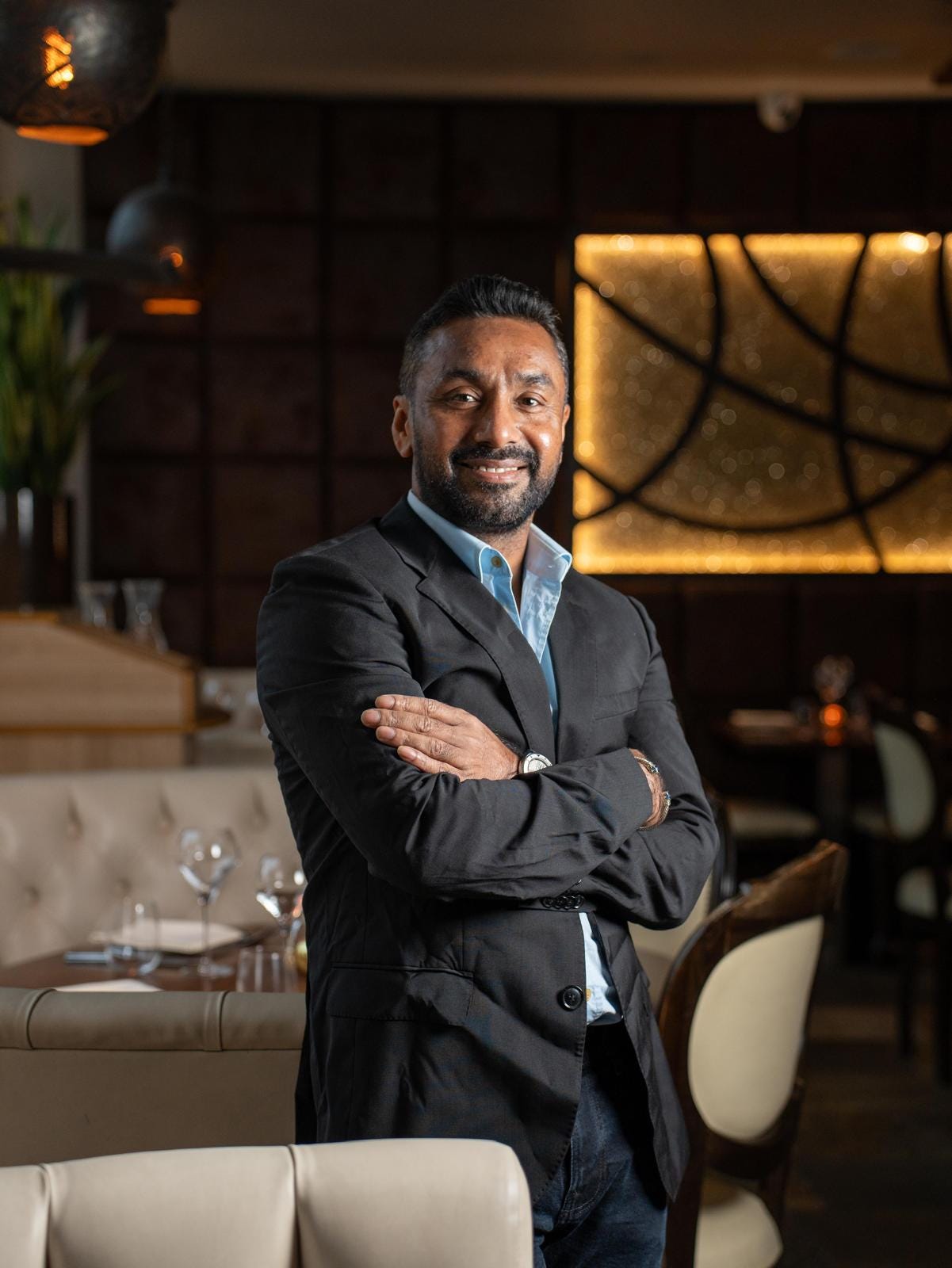
In 1994, a 21 year-old Luthfur Rahman upped sticks from East London – where he was born and raised by Bengali parents – to the quiet market town of Yeovil. There, he and friends took over the running of the Taj Mahal – an Indian restaurant on Middle Street that’d been going since the ‘60s – and named it Viceroy Tandoori.
So begins the story of a man who arguably influenced Indian food in South West England more than any other.
Not without its troubles, however. As a journalist for The Independent wrote from the frontlines in 1995, most people of this ‘small, uneventful’ deepest Somerset town had had little contact with anyone non-white before: ‘The restaurant was urinated on, eggs were thrown, graffiti was sprayed on the outside walls saying “Pakis go home, Pakis smell.”’ Luthfur, who with colleagues had barricaded themselves inside, referred to the experience at the time as “no better than a prison sentence.”
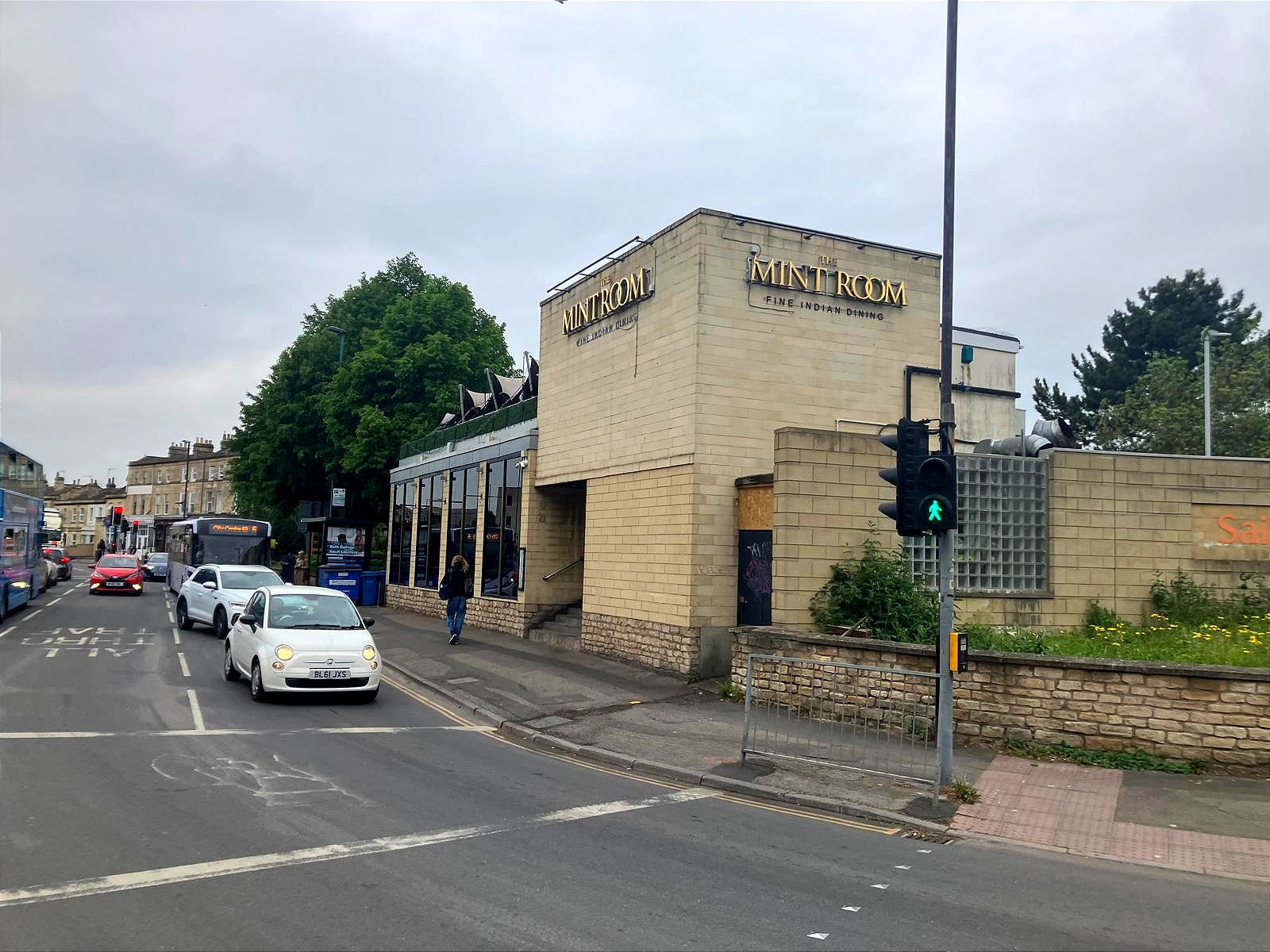
It didn’t stop him though. Three decades and several more restaurants later, including a placating of locals often via their stomachs, Luthfur’s back to one main event – the Mint Room, a more-on-the-side-of-casual fine dining restaurant on Bath’s Lower Bristol Road (another Mint Room branch enjoyed an almost decade-long spell in Bristol until 2024).
One of the things about the Mint Room is its leaning into regional Indian cuisine. Those familiar with what happened in London in the mid-2010s, when restaurants like Dishoom, Gymkhana, Kricket, and Gunpowder (not without their eloquent critics) first opened with their industrial interiors or aesthetic nods to the British Raj, large marketing budgets, and concise menus of black dahl, chaat, vada pav, butter chicken, and so on. As such, they caught the attention of non-resident Indians but also impressionable white middle class featherbrains like me, not dissimilar to what curry houses did in the ‘50s onwards for a British public seeking something different on a Friday night.
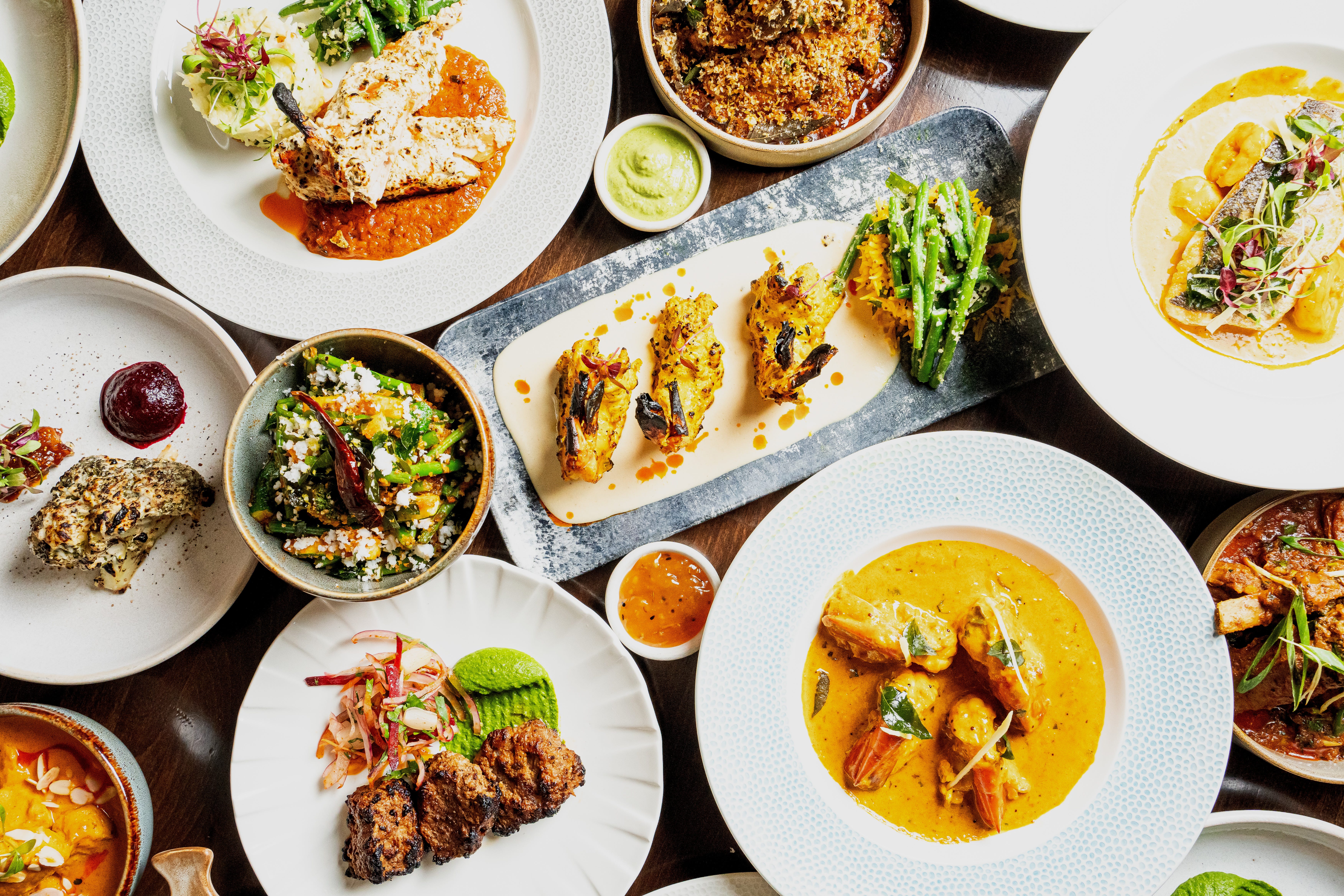
Anyway, with the exception of restaurants such as the Mint Room and Bandook (the latter which, incidentally, Luthfur’s brother founded), regional Indian food is still a rarity in the South West. The Mint Room’s £60 tasting menu takes you on a figurative tour of the subcontinent, stopping off at the likes of Lucknow for chicken seekh kebab; Rajasthan for lamb skewers marinated in chili and yoghurt then roasted in a clay oven; and Goa for salmon recheado masala.
It’s a warm introduction to at least a semblance of what Indian cuisine is really like, as much as it is to Luthfur’s legacy itself. Which now stretches back generations – from his former Yeovil guests who remember the “fantastic” Viceroy for their “first Indian meal”; for having “never tasted anything remotely like it”; and for “a hot cloth I thought was a pancake roll”, to yesterday’s diners seduced by the Mint Room’s “carnival of flavours” and (from and Indian) “tastes the same as in my country.”
In the interest of getting to know the guy who heavily influenced eating out on Indian food in the South West as we know it, the following – edited for clarity and brevity – was recorded just after lunch at the Mint Room, Bath.
Below the paywall: Luthfur on why ‘Indian’ restaurants aren’t Indian, the Dishoom effect, and how British appetites for chicken tikka built a city in Bangladesh.
This post unlocks for free subscribers in one week’s time — come back then or subscribe for £35/year to read now and get access to various seasonally-updating guides on food and eating in Somerset.
Hugh: I think I first ate out in Bath a decade or so ago. It’s definitely come a long way since then. In those 15 years since you’ve opened here, how would you say things have changed?
Luthfur: After COVID, or maybe Brexit, there was a lot of expansion. With me, I started off in 1994. I was always eager to bring something unique to wherever I am, and Somerset was still a long way behind London. Back in those days – the mid ‘90s – there were shortages of even a good curry house. And me and my friends, we found there was a market there.
Hugh: Have you been back [to Yeovil] since?
Luthfur: I had the [Viceroy] restaurant until 2022, when I sold it completely. Before that, I leased it from 2018. So I’d been there 22 [sic] years. I had two restaurants in Yeovil and one takeaway, by the mid-early naughties. And then I had one in Taunton, Axminster, North Petherton, Sherborne, and Somerton.
Hugh: A proper empire.
Luthfur: Proper little empire. But I came with an entrepreneurial mindset.
Hugh: So with all those restaurants across Somerset, between then and you having this place and one in Bristol, what happened?
Luthfur: I was always eager to do something high-end, but I didn’t have the location. I’m from East London, so beggars cannot be choosers. So I chose Yeovil, started out very humble, and my dream was to have a Michelin starred restaurant. In 2008, I started doing an imitation fine dining restaurant – like a test run – in Yeovil, which was The Mint Room but I called it something else. It worked, to a certain degree.
My restaurant was constantly in the media for other reasons, and good reasons, and Yeovil wasn’t the best place for diners, but I created a [restaurant] where a lot of celebrities would come. Some were living in Sherbourne. They used to defy the odds of coming to Yeovil, and when it was a very, very rough time.
I wanted to change people’s mentality through feeding and being hospitable. One of my chefs was very into what I was doing, but because we were in Somerset, he wanted to take a break from me. He said, “Look, I’m going to go and work in a high end restaurant. And after I’ve learned everything, I promise to come back in five years’ time.” That was in 2010. He became the head chef of Tamarind [one of London’s foremost Indian restaurants by most metrics]. In 2015, he came back and we opened Clifton Mint Room.
Hugh: So when you were using the Viceroy as a testbed, for people who’d dined there at the time – if they were to come here, what would they recognise?
Luthfur: I left Yeovil after serving people from three generations. They’ll now come to Bath and say, “My God, what you created in Yeovil, now we know. Now we know what you had given us and we didn’t really fully appreciate.” They say, “Since you left, everything has gone down.” Standards [of other restaurants in Yeovil] had gone back to 1994, when I first started. These aren’t bad restaurants, but my competitors were tired of me. And that’s crazy. It should be made into a story – a film, or something.
Hugh: Even with all your restaurants doing well you scaled back? Why?
Luthfur: Because society has changed now. After COVID, the new generation – and the ones that are becoming the old generation – all want a fast-track. They don’t have time to check who’s the best, or where to go.
My ancestors are from Sylhet [a city in eastern Bangladesh]. They’re the ones who started these so-called Indian restaurants from the ‘50s, and they did a very good job of it, because it was so profitable. It was [recognised as] a £4.5 billion industry back then, but a lot of it was not [recognised], so I would say it was about a seven or eight billion pound industry. That money, to India via a tax-free way, went to Sylhet, which actually made it into one of the wealthiest areas in Southwest Asia. They used it to create buildings in Sylhet. They used to outdo each other, making the tallest building or the most spacious, nicely decorated house. Just to show off.
Hugh: I had no idea.
Luthfur: A lot of people deny it, but that is the truth. Every restaurant was like a mini industry.
Hugh: That kind of profit doesn’t happen anymore, does it?
Luthfur: These are the Bangladeshi Sylheti people. Very illiterate. When you have enormous amount of money coming into illiterate people, they don’t know what to do with it. Bangladesh was one of the poorest countries in the world, but that region actually fed the whole country [of Britain] on chicken vindaloo and chicken tikka masala. I call Sylhet the Chicken Tikka Masala City, or the Vindaloo City.
Hugh: That’s fascinating. But that’s not really the food you do here. One of your servers was telling me you want to show people there’s more to Indian food than tikka masala and jalfrezi?
Luthfur: We are very authentic but fusionalized by previous years of experience. When the Sylhetis were doing curries for the English locals, they were filtering dishes – spices would be there, but not entirely authentic. They would add cream or sugar to balance the palette and attract English people.
Before ‘71, Bangladesh was called East Pakistan. After the partition in 1947, a lot of the Bengalis were classing themselves as Indian. So, even now, lands I will inherit and pass on to my siblings say ‘British India’. They still got that on the land registry. So this is where they kept ‘India’ and ‘Indian’. It’s all lack of communication and education. But overall, the ‘Indian’ restaurant has done something amazing.
The chicken koma is not the korma they started here in the UK in the ‘50s and ‘60s and ‘70s. It’s nothing like the koma back in Bangladesh. Vindaloo originally is a Portuguese and Gawan dish. It was a hot curry with gravy, chilli powder, potato, lemon juice, coriander. [In the UK,] the punter from the pub would have nine pints and go and bet with his friend Roger to have vindaloo, the hottest curry.
Hugh: Like a cockfight.
That’s what it was. That’s what it was. Why it was popular? There are very, very gloomy days in Britain. But then you have the chicken baltis, the chicken madras. The flavoursome food with the drink. Tasting that spice. Papadams with all the chutneys – crunch, crunch, crunch.
Hugh: It’s a visceral experience.
Luthfur: Isn’t it?
Hugh: When I was at school, I’d go to a curry house [Taj of Kent] with friends a lot, and the servers would call you ‘m’lord’. It was endearing at the time, but in hindsight feels a bit uncomfortable because of the colonial overtones.
Luthfur: I started in 1988 and had to call everyone sir, madam, ma’am. Sir, yes sir, no sir. Yes, sir. Thank you, sir. I used to work six days a week, 60 to 70 hours a week. And the owners used to provide accommodation.
Hugh: Meanwhile, the ‘contemporary Indian restaurant experience’, if we can call it that, is things like Dishoom.
Luthfur: With Dishoom, I’m very pleased with the concept they came up with. They’re very clever people, have got a lot of wealth behind them and what they’ve created is amazing. Amazing. And fair play to them if they can do it and if the customers like it – that’s what matters.
Places like Dishoom have taken it to a new level because they’ve utilised [the UK Indian diaspora’s] 40 years of hard work. Those people encountered a lot of racism. A lot of race relations were created because places like Plymouth or Exeter – where they saw hardly any Asians – then suddenly had Mr. Mia or Mr. Uddin or Mr. Ali open up a Kohinoor or Taj Mahal. And they’re like, who? A lot of people find this is a good thing, where they can exchange cultures and learn a little bit about history. And those owners, they had their family growing up with the locals.
Hugh: I don’t think we’d be talking quite as much about imperialist and colonialist history and those issues without those people or their restaurants.
Luthfur: Imperialism, colonialism, what’s done is done. But I would say those guys, the Sylheti people, have done a very grand job. Like the Chinese, who have carried on with their Chinese takeaways, then their kids went to university, and came back and helped the parents. Similar with the Sylheti people. But the Sylheti people, they’ve expanded in a different way. They did restaurants, grand restaurants. Some places that actually created a buzz.