



Earlier this year, 18 major hospitality brands – including KFC, Nando’s, and Burger King – abandoned a decade-long industry pledge to improve the welfare of the hundreds of millions of chickens they source.
Why? Well, one clue would be that the world of Big Chicken is normally dominated by pressures to rear chicken as fast as possible, as cheap as possible.
But, rather than an outsider peering in, I was interested to hear from someone inside this world, and so invited Somerset resident and poultry man Tom Woolman — who among other things works with UK-based hatchery Annyalla Chicks and co-hosts the Poultry Network Podcast — to untangle some of the nuance surrounding chicken before it gets to our plate.
Said nuance has something to do with the genetic make up of various chicken breeds – their names, as you’ll find, more befitting WW2 bomber aircraft or something astronomers would call a new constellation than what you might label a category of animal.
The nature of the debate is also curious to me — down the butcher, one might talk breeds of pigs (Middle White! Gloucester Old Spot!), cattle (Belted Galloway! Longhorn!), and sheep (Herdwick! Dorset Down!) – especially as each has their specific purpose, whether yield, flavour in their meat, temperament, minimising strain on the land, and so on. The breed of four-legged animal a farmer chooses gives us a strong hint as to how sustainably they farm. What I want to know is: is this true of chicken too?
Take it away, Tom.
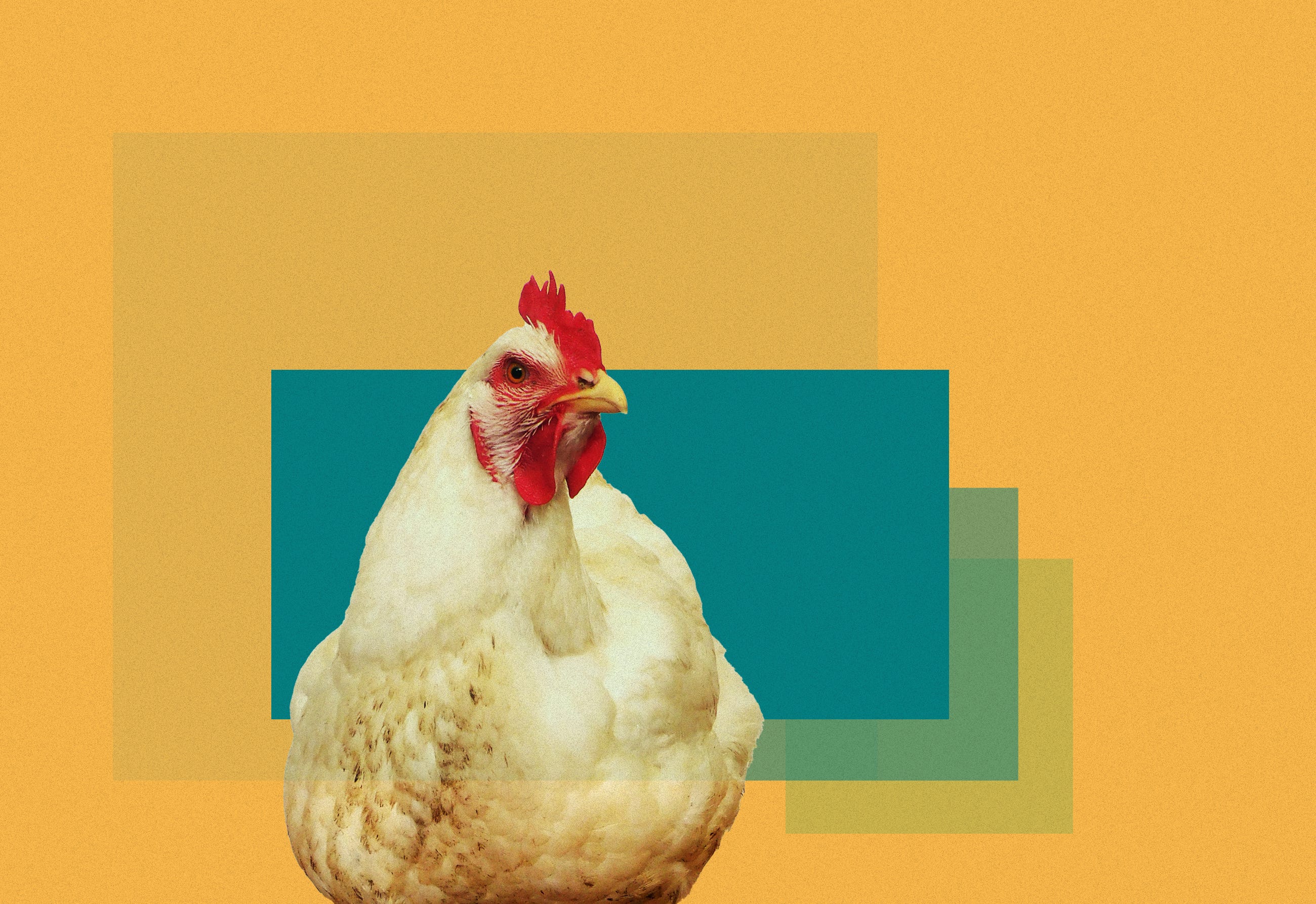
Apparently, we are a nation of chicken lovers. We love to eat them but we don’t love to talk about them. With 20 million grown and slaughtered in the UK every week, the numbers can feel overwhelming.
Enter the Better Chicken Commitment, or BCC. Created in 2016 as a set of rules for major retail and hospitality chains to follow when sourcing higher welfare birds, one of the BCC’s five stipulations is the adoption of slower growing breeds that “demonstrate higher animal welfare outcomes” (editor’s note: In other words, breeds much less susceptible to lameness, limb deformities, and organ failure, while generally requiring fewer antibiotics).
Converting to a slower growing breed, however, hasn’t been easy – earlier this year, a number of large food businesses and restaurants, including KFC, Wagamama, and Nandos, publicly announced that although they had signed up to the BCC when it was launched, they were now unable to follow through because of “the requirement to source only slower-growing breeds”.
Why is the breed of chicken such a problem then, and why exactly would someone – whether farms supplying M&S or those selling at local farmers’ markets – choose one breed of broiler (a chicken raised for meat rather than eggs) over another?
The main players
The Ross 308 dominates poultry meat production in this country, making up 95% of all chicken produced. The Ross is bred to be an all-round performer, producing lean meat which doesn’t have a strong flavour and is versatile in the kitchen. Ross birds will be ready for slaughter as early as 28 days, with between 36 and 42 being the norm. They grow at around 65g per day over the course of their life.
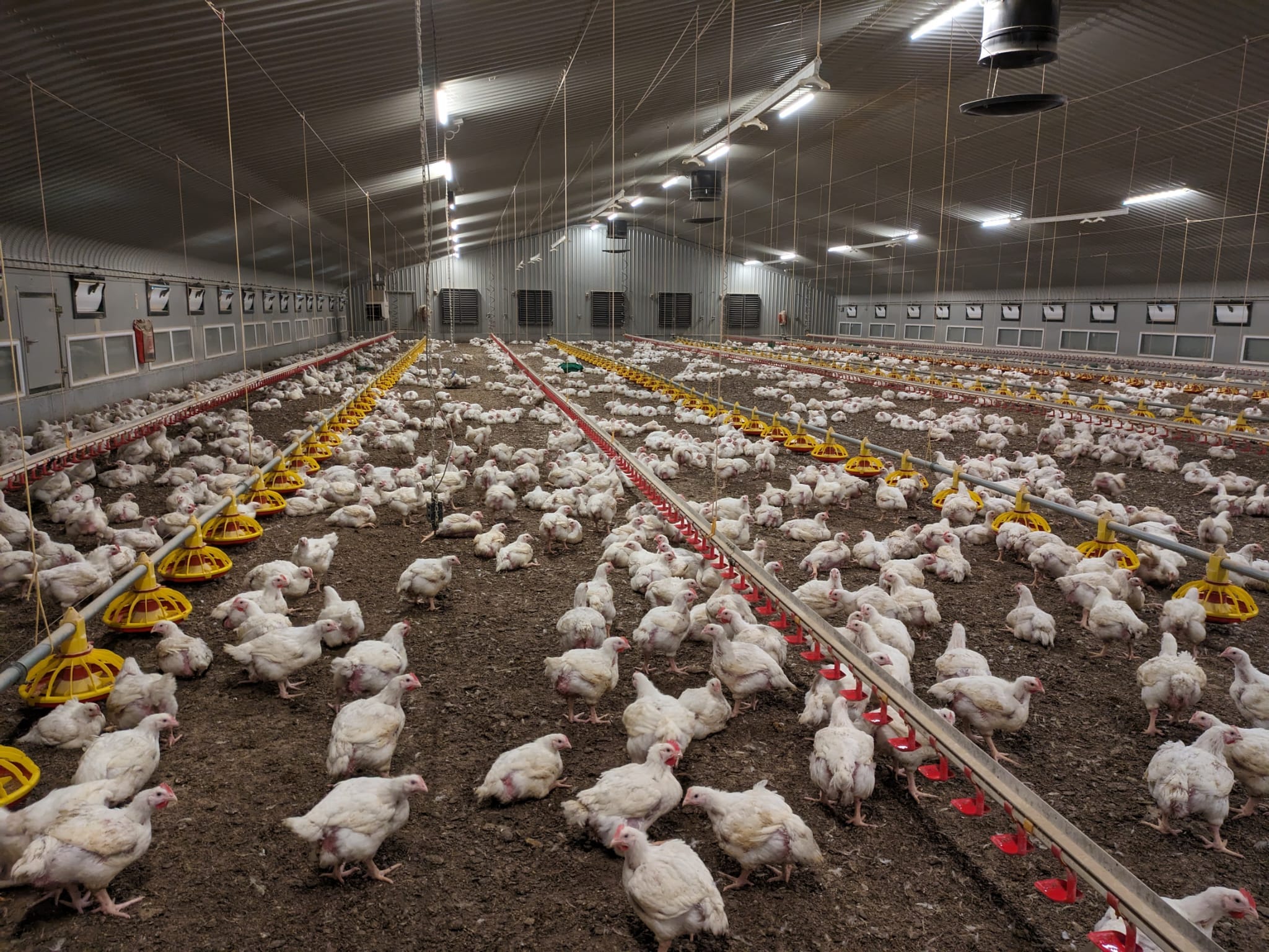
Across Somerset, birds like this are grown for a number of different chicken processors, including 2Sisters, IHP, and Avara Foods.
Other breeds are typically slower growing and are supplied by a business called Hubbard. Hubbard has many of its farms and hatcheries in France, where free-range chicken has a well-established following.
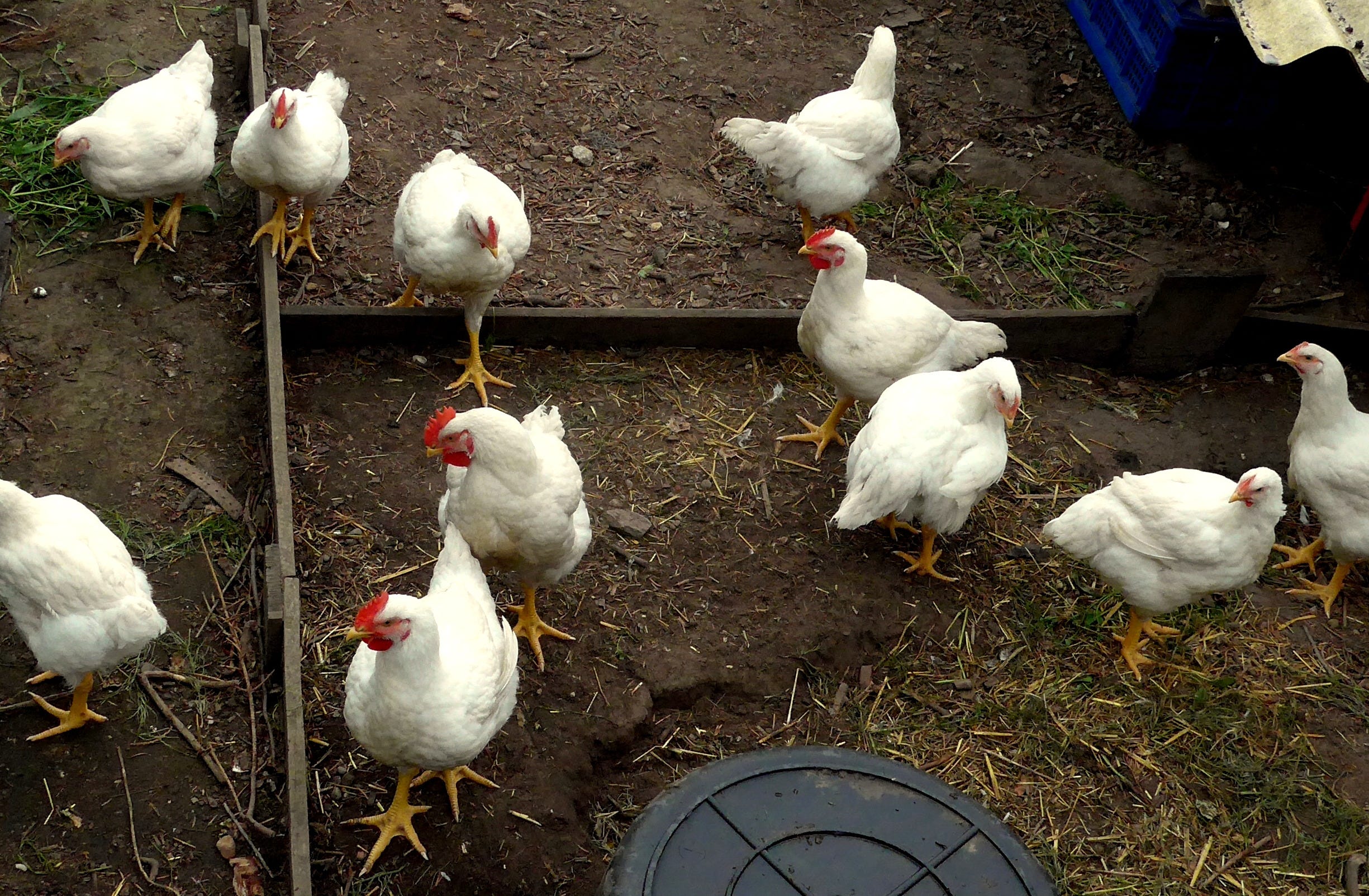
The most popular bird for free-range systems is the Hubbard JA87, which tends to be ready for slaughter at 56 days old. For a chicken to be legally classed as free-range, it must spend at least half its life with access to an outdoor range. 28 days is the typical brooding period where chickens will go from a fluffy chick to a fully feathered forager, with a further 28 days out on the range to allow it to be labelled as free-range.
Examples of Somerset producers utilising 87s for free-range are Beech Ridge Farm at Wellington, run by Chris and Holly Dibble; Kevin and Claire at Gather Ground in Bruton; and Nempnett Pastures in the Chew Valley, where birds are pasture-raised by George Ford and live outside full time once they are finished brooding.
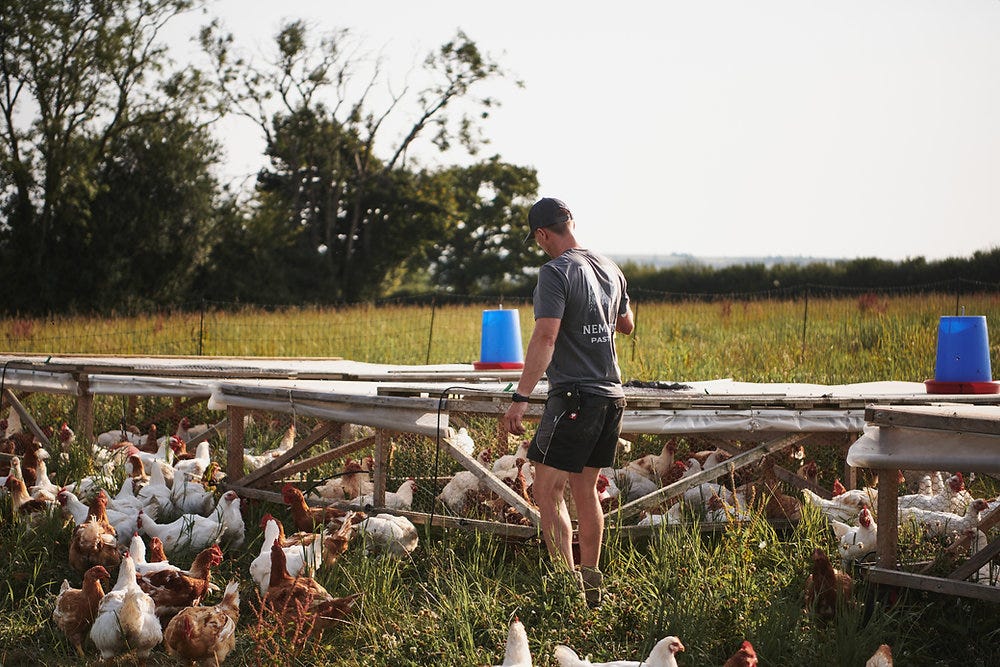
With the JA87 the carcass will be less well fleshed than a Ross 308. The meat will also be darker and have more texture. Other extensively-used breeds such as the JA57 are used in organic systems, where these characteristics are even more pronounced and they have to live for a minimum of 81 days.
Beware free-range labels
Some chicken producers will use a Ross 308 in a free-range system. These birds will deliver a hefty carcass at 56 days and convert feed more efficiently than their Hubbard counterparts, lowering input costs. Because of that, shoppers may feel that they are getting very good value compared to the slower growing breeds. In reality, these birds might not actually go outside much, as the Ross 308’s priorities are to eat, drink, and rest.
Suppliers who successfully utilise a Ross 308 in a free-range system include Creedy Carver in Devon. Their website describes producing a ‘conventional breed’, which is fairly meaningless unless you know what that terminology refers to. Likewise, chicken for sale in a farm shop without any information about how it is produced is likely to be a standard broiler. There is sometimes more transparency around how a chicken is produced from a supermarket than from a small-scale supplier.
When you choose to buy eggs, there is a clear difference between a chicken being in a cage and a chicken having access to the outside. The cost difference is negligible. With chicken meat however, both BCC and standard birds are kept indoors, in barns with windows, perches, and bales. The differences are subtle, down to grams per day of carcass growth, and quite frankly if you took someone off the street to look at a shed of chickens I’m not sure they could easily tell the difference.
One way of knowing for sure if a bird is slow-grown is whether it’s certified by the RSPCA or organic, as these assurance schemes permit a slower growing breed as part of their standard.
Breeding for the future
Coming back to the Better Chicken Commitment, how are the options laid out so far?
With the Ross 308 not included in the BCC, producers have scrambled and struggled to implement other breeds that are approved, such as the JA87 and JA57.
Meanwhile, a breed called Redbro has been specifically created by Hubbard for the BCC market, reaching slaughter weight at 49 days. It was designed to fit between the production characteristics of a Ross and a JA87.
Here lies the problem, for the breed tries to be all things to all men but ends up coming up short in many respects. The Redbro doesn’t deliver the efficiency and value of a Ross 308, yet it doesn’t represent the sort of free ranging lifestyle that the JA57 and 87 are famous for.
From a supply chain point of view it doesn’t work either. If the UK requires 20 million chickens per week, switching to a breed which takes another ten days to reach slaughter weight means we need another 20% more poultry houses to produce the same volume of product. And who wants more chicken sheds built in their parish?
Chicken farming decisions
Ultimately, the production system and breed of chicken a farmer chooses is likely to reflect their business needs. Farms that have other livestock may choose free-range or organic birds, as they require less attention and allow the farmer to focus on other enterprises.
By contrast, Ross 308 birds are often demanding in terms of management and will often be run as a larger specialised enterprise. Farmers who see their role as promoting food security will tend to favour intensive production.
So, is there any hope of the Better Chicken Commitment gaining further traction? Probably not. M&S and Waitrose have fully embraced the BCC, but they have discerning and affluent customers willing to pay for a product with easy to understand ethical credentials. You might find higher welfare chicken on small, local farms. Or you might find worse. For other shoppers, the lean and affordable qualities of poultry are the most important.
It would seem that as food citizens and farmers everyone would like to do the right thing, but we still remain split on how to produce chicken.
Thanks Hugh - really interesting to read how producers are coping, or not, with the BCC. In the past I have carried out trials on the different hybrids - the carcasses and taste varying so much. And just as important is a good end - a poultry abattoir that respects the birds.